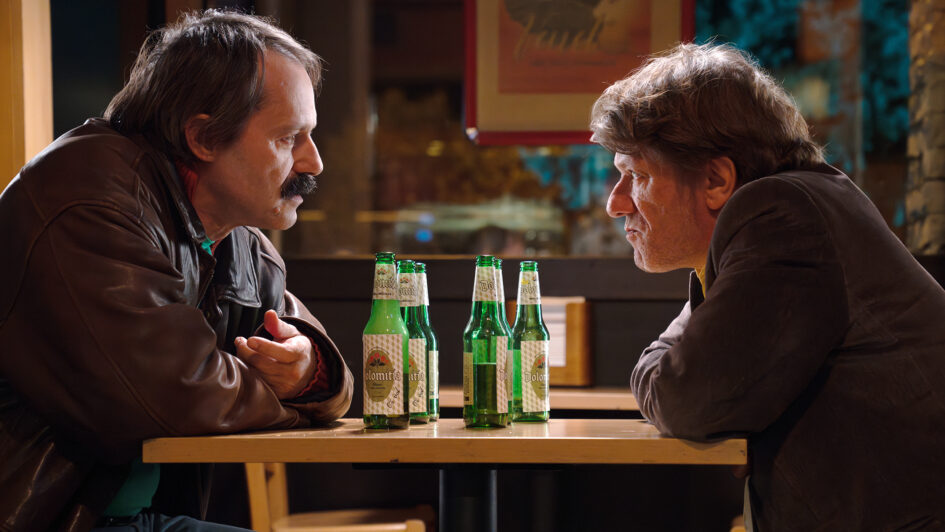
Back in 2019, I found myself in a place I wouldn’t wish onto anybody. I was recently divorced and my house felt less like a home and more like solitary confinement. The silence wasn’t peaceful. It just sat there, heavy, making you a little too aware of your own thoughts. So, I started going to a local bar. Not to get drunk — I’m not much of a drinker. I just needed to be around people. I needed noise. I needed something that reminded me I was still part of the world.
If you spend enough time in a bar, you realize everyone there has a story. One night, I got into a conversation with an older gentleman about regrets. He told me about losing his wife to cancer, about all the plans they never got to live out. It was heartbreaking in a quiet, honest kind of way. And after all of it, he just shrugged and said, “All I can do is keep on keeping on.”
No big speech. No dramatic ending. Just the truth. That same kind of quiet, reflective honesty is exactly what The Last One for the Road taps into.
Childhood friends Carlobianchi (Sergio Romano) and Doriano (Pierpaolo Capovilla) have spent most of their lives running small-time scams, drifting from one opportunity to the next without much thought for the future. After a stop at a roadhouse, their paths cross with a group of university students out for a night of partying, and the two quickly insert themselves into the mix.
Among the group is Giulio (Filippo Scotti), a shy and reserved student who seems completely out of place compared to the louder personalities around him. For reasons that aren’t entirely clear at first, Carlobianchi and Doriano take a liking to him and invite him along as they continue their night.
What follows is less about a traditional plot and more about a series of loosely connected misadventures, where conversations and small moments carry more weight than any grand event. As the trio moves from place to place, Giulio begins to see past the surface of his new companions, uncovering the regrets, contradictions and hard truths that define who they really are.
At the same time, their influence begins to chip away at Giulio’s own insecurities, forcing him to confront parts of himself he’s kept subdued. By the end, what started as a random encounter turns into something far more meaningful, quietly reshaping how Giulio sees his life and the path ahead.
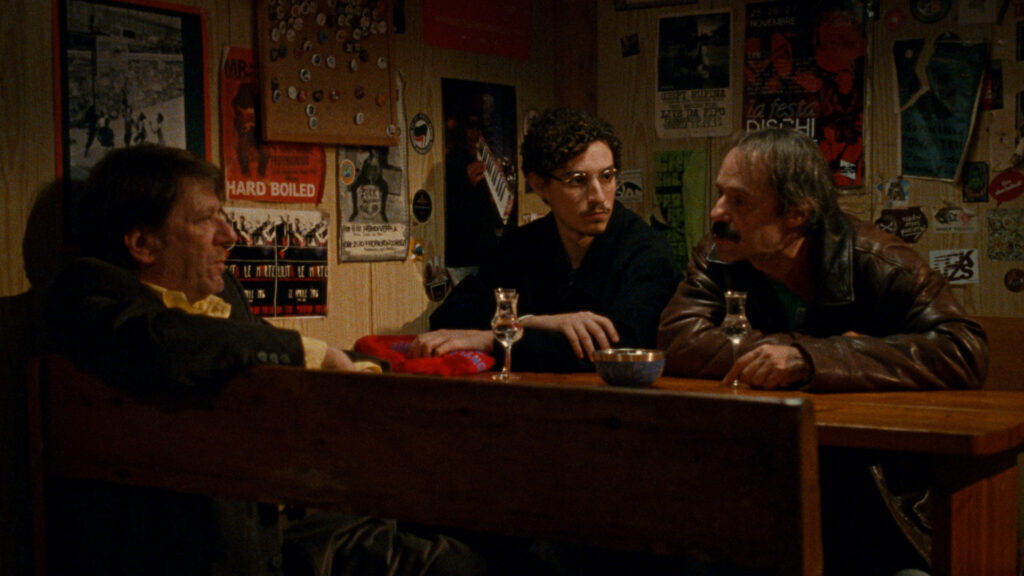
One of the biggest strengths of The Last One for the Road is how relatable it feels. At some point, almost everyone has found themselves in a conversation that starts off casually and slowly drifts into something deeper and more honest than expected. The film taps into that universal experience in a way that feels natural, instead of forced. Even when the story, itself, feels minimal, that sense of familiarity keeps you engaged because it reminds you of your own late-night talks and the moments that stuck with you long after they ended.
The performances are what make all of this work. In a film that relies so heavily on dialogue and character interaction, there is nowhere for the actors to hide. If they miss the mark, the entire thing falls apart. Thankfully, the cast delivers in a way that feels grounded and authentic. Nothing feels overly rehearsed or exaggerated. Instead, the characters come across like real people, the kind you might actually sit next to at a bar and end up talking with for hours.
Atmosphere does a lot of the heavy lifting, as well. The lighting, framing and pacing all come together to create that feeling where everything slows down just enough for conversations to linger. There is a slightly surreal quality to it, like time is stretching out in a way that makes even small moments feel significant. The Last One for the Road pulls you into its world and helps give weight to scenes that might otherwise feel quiet or uneventful.
The biggest issue with The Last One for the Road is its lack of structure. This is very much a “go with the flow” kind of film, which works in short bursts but starts to wear thin as it goes on. The story doesn’t really build toward anything concrete, and at times it feels like it’s just drifting from one moment to the next without a clear sense of direction. That can make it hard to stay fully invested, especially if you’re someone who likes a bit more narrative momentum.
There are stretches where it almost feels like you’re watching a collection of scenes rather than a fully formed story. While that loose approach fits the film’s themes, it also makes certain moments feel less impactful than they should. Without a stronger structure to guide it, some of the emotional beats don’t land as hard as they should, and by the time the film wraps up, it can leave you feeling like you experienced something interesting, but not necessarily something complete.
I give The Last One for the Road four out of five stars.
Despite its loose structure, I really felt like I was along for the ride with these guys, drifting from one conversation to the next and taking in everything that came with it. It’s not a film that rushes you or tries to force big moments. It just lets things happen. And in a way, it took me right back to those nights I mentioned earlier. Sitting in a bar, talking with someone you barely know and somehow walking away with something that sticks. No big takeaway. No perfectly wrapped ending. Just the experience.
And like that older gentleman told me back in 2019, sometimes all you can do is keep on keeping on.