Back when I owned my comic book store, my buddy Ryan and I sometimes ran across the street to the convenience store for lunch. One day, I grabbed a turkey sub (complete with pickles, mustard, relish and bacon) and Ryan picked up a chicken sandwich. We returned to find a few friends hanging out and set our food down in the back office. Ryan realized he had forgotten drinks, so he headed back across the street, leaving four of us in the shop. I was up front talking to a vendor and checking Pokémon card stock.
That, for the record, is my account of my whereabouts.
When Ryan returned, his chicken sandwich was gone. Nobody claimed responsibility, and everybody had their own story, including me. To this day, the chicken sandwich thief remains unidentified. It’s funny how several people can be in the same place and still leave you without a clear picture of what happened. You know these people, so you figure you should be able to tell when somebody is leaving something out. Apparently, friendship does not qualify you to investigate missing poultry.
The stakes are considerably higher in Radik Ashimov’s Burning, but its conflicting accounts of a single tragedy brought that missing lunch back to mind.
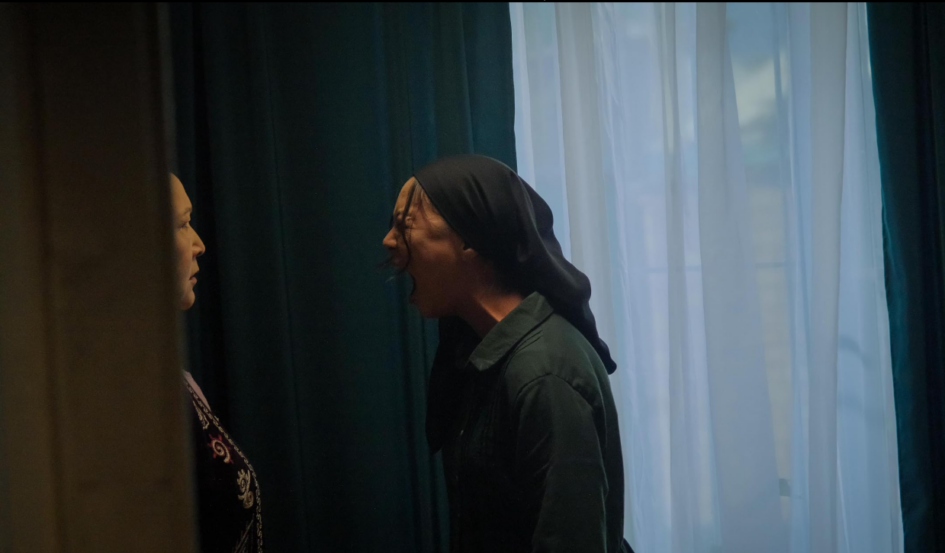
In Burning, a house fire in a Kyrgyz village brings neighbors together to discuss what might have caused it. At the center of their accounts are Asel (Aisant Edigeeva), her husband Marat (Omurbek Izrailov) and his mother Farida (Kalicha Seydalieva), whose family is still struggling with the loss of a child.
As different versions of the events unfold, suspicion shifts between the three, with grief, family tensions and fears of a supernatural presence shaping each telling. What emerges is a mystery that asks us to question both what we’re seeing and the people telling the story.
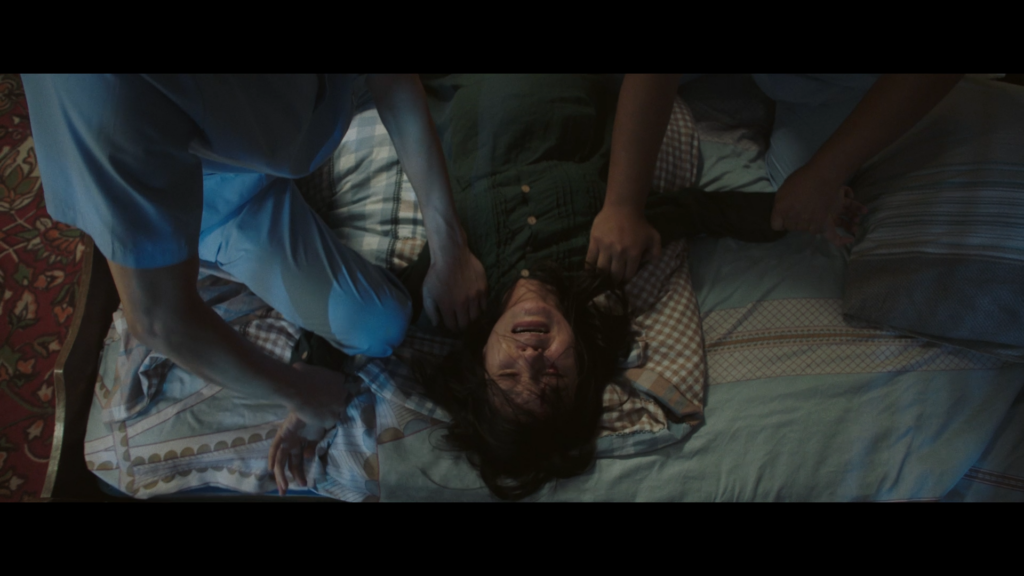
What I liked most about Burning was its Kurosawa influence. Seeing the same events through different accounts kept me interested because each version gave me a reason to reconsider the characters and their motivations. Someone who seemed threatening in one telling could come across quite differently in the next. That uncertainty gives the film plenty of intrigue. There’s something engaging about having to reassess a scene you thought you already understood. It invites you to pay attention to the smaller interactions, because a gesture or reaction can take on a different meaning once the surrounding circumstances change.
The cast deserves credit for making those changes work while playing different versions of the same people. That is a tricky assignment, especially when the audience is already looking for reasons to distrust what it sees. Edigeeva, Izrailov and Seydalieva have to adjust the relationships as well as their individual performances, depending on who is telling their story.
The tension depends on how these people respond to one another, and each account changes that balance. It gives the actors room to show different sides of the family without requiring a new set of characters every time the story starts over.
That approach also makes it a little difficult for me to fully follow the story.
I enjoy a movie that leaves room for interpretation, but there were moments when I was still sorting through the previous account as the next one unfolded. Watching in a language I don’t speak may have contributed to that. The subtitles told me what was being said, but I wondered whether I was missing nuances in the actors’ delivery that would have helped me understand their intentions. That’s a limitation of my own viewing experience, though, rather than something I can confidently pin on the film.
My hesitation comes down to the balance between keeping me guessing and giving me enough footing to appreciate each new perspective. I don’t need every question answered, and explaining everything would take away some of the appeal here. Still, a little more clarity might have helped me spend less time untangling the accounts and more time connecting with the family caught inside them. The grief gives the story an emotional weight that deserves that attention.
I could appreciate what Ashimov was attempting, even when the storytelling left me a step behind, and I found the effort interesting enough to keep following. I give Burning three out of five stars.
I enjoyed its Kurosawa-inspired storytelling and the way each account made me reconsider the characters, even if I sometimes struggled to put the pieces together. You can watch Burning exclusively on IndiePix Unlimited on Amazon Prime Video.
Just like the day Ryan’s chicken sandwich disappeared, having several people willing to explain what happened doesn’t necessarily make it any easier to figure out. Only Batman could have solved that mystery.