Summer camp has always seemed like one of those uniquely American experiences. Coming-of-age movies taught me that every camp had an intense rivalry with another camp or an annual competition that somehow determined everyone’s fate. There was also at least one group of lovable misfits destined to save the day.
Of course, horror movies taught me something completely different. According to them, summer camps are where hockey-masked killers stalk the woods, chasing down counselors who constantly make terrible life decisions. They also taught me that anyone named Angela was probably someone you wanted to leave alone. Somewhere between Friday the 13th and Sleepaway Camp, Hollywood convinced me that spending a week in the wilderness was either the best summer of your life or your last.
As for me, the only summer camp I ever attended was band camp. No, this isn’t about to turn into an American Pie joke. I spent a week learning marching drills under the unforgiving Tennessee sun, trying not to pass out while carrying a trumpet that somehow seemed to gain another 10 pounds every afternoon. There weren’t any fierce camp rivalries, masked killers lurking in the woods or underdog competitions to save the camp.
Just a bunch of band kids trying to survive rehearsals until dinner.
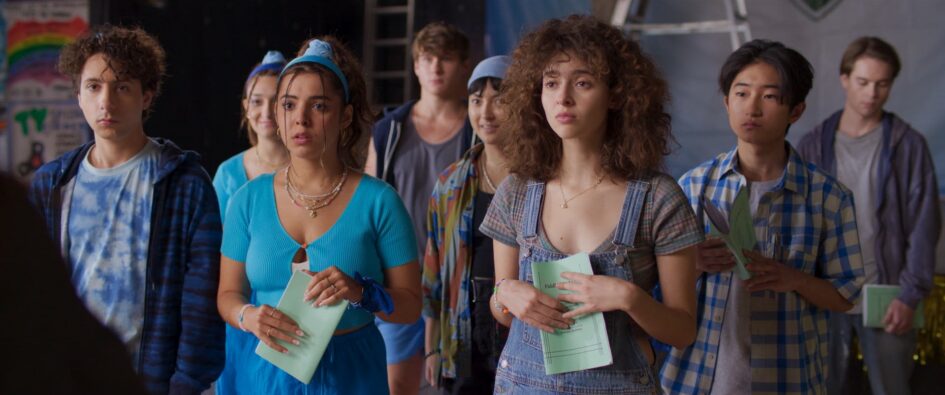
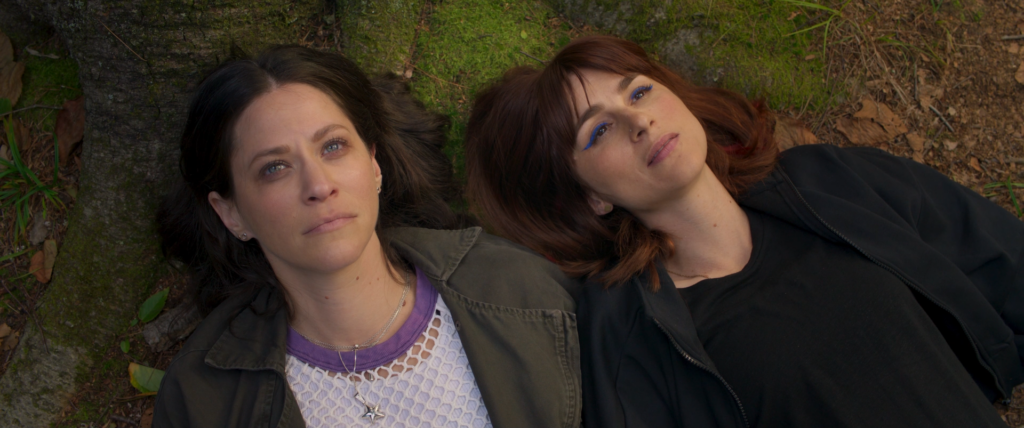
The Floaters follows Nomi (Jackie Tohn), a struggling musician who reluctantly returns to the Jewish summer camp she once attended after her career takes an unexpected setback. Reuniting with her longtime friend Mara (Sarah Podemski), who is now responsible for keeping the camp afloat, Nomi finds herself assigned to supervise a group of campers known as “The Floaters,” kids who don’t quite fit into any of the camp’s established groups.
When the future of the camp comes into question, Nomi and her unlikely group of misfits discover they may be the camp’s best chance to turn things around.
Coming-of-age stories aren’t exactly difficult to predict. You can usually spot the underdogs within the first few minutes, identify who will learn the biggest life lesson, and make a pretty good guess about how everything will wrap up before the final act begins.
The Floaters doesn’t do much to reinvent that formula, and to be fair, it doesn’t seem interested in trying. Instead, director Rachel Israel focuses on making the audience care about the people at the center of the story, trusting that strong characters can carry a familiar premise.
While the film is set at a Jewish summer camp, that aspect of the story serves more as a backdrop than the central focus. The traditions and culture give both the camp and film its own identity, but the themes are universal. Anyone who has ever felt like they didn’t quite fit in, struggled to find their confidence or wondered where they belonged will recognize pieces of themselves in these characters.
The setting makes The Floaters unique, but it’s the relationships between the campers and counselors that drive the story.
For a coming-of-age comedy, The Floaters simply isn’t all that funny. That’s not to say it never gets a laugh, but the jokes are surprisingly hit-or-miss. Some of the humor is rooted in Jewish camp culture and traditions, and while that undoubtedly adds authenticity, there were moments where I felt like I was on the outside looking in. Those jokes may land much better for audiences who share that background, but for me, they often passed by with little more than a polite smile.
I was also disappointed by how little the supporting cast is actually used. Seeing names like Seth Green and Steve Guttenberg in the credits, I expected them to play much larger roles in the storyline. Instead, they’re little more than glorified cameos, appearing just long enough to remind you they’re in the movie before disappearing into the background. It’s not a dealbreaker, but it does feel like a missed opportunity considering the talent involved.
That said, the wrestling fan in me couldn’t help but smile when I saw Maxwell Jacob Friedman. His role may be small, but it was still fun seeing MJF pop up on screen.
My biggest issue with The Floaters is that it tries to tell too many stories at once. There are the campers learning to find their place, Nomi’s attempt to rebuild her life after her music career stalls, Mara’s struggle to keep the camp from closing, the rivalry with the neighboring camp and several individual camper storylines all competing for screen time.
None of these plots are bad on their own. In fact, most of them are genuinely interesting. The problem is that the film keeps jumping from one storyline to the next before any of them have a chance to fully develop. As a result, some character arcs feel rushed, while others never deliver the emotional payoff they seem to be building toward.
I give The Floaters three out of five stars. While it never breaks free from the familiar coming-of-age formula, it still delivers enough heart and likable characters to make the journey worthwhile. I just wish it had spent a little more time developing its strongest storylines and a little less time trying to juggle so many at once.
If you’re looking for a feel-good underdog story with a unique backdrop, The Floaters is worth checking out.
As for me, I’ll stick with my band camp memories. The only thing chasing me through the woods was the thought of another afternoon marching rehearsal, and the only competition we had was trying to stay in step. Looking back, maybe that wasn’t such a bad deal after all.
At least I never had to worry about Jason, Angela or a camp competition determining the fate of the entire summer.