I’ve never been particularly good at getting my daily steps in. Every fitness app I’ve ever used seems convinced that walking 10,000 steps a day is the secret to a healthier, happier life. Meanwhile, I’m over here trying to figure out whether walking from my couch to the refrigerator counts as exercise.
Don’t get me wrong, I understand the benefits of staying active. I just prefer my entertainment to involve a little less walking and a lot more actually happening.
That brings me to Heat of Madness, the latest film from Belgian writer-director-producer Karim Ouelhaj. Psychological horror has always been an interesting corner of the genre because it doesn’t necessarily rely on monsters, masked killers or things that go bump in the night. Sometimes, the most unsettling experiences come from exploring the darker corners of the human mind.
A good psychological horror film can make you question everything you’re seeing, leaving you uncomfortable long after the credits have rolled. And when done correctly, those journeys can take audiences to some genuinely disturbing places. The trick is finding that delicate balance between keeping viewers guessing and keeping them interested in finding the answers.
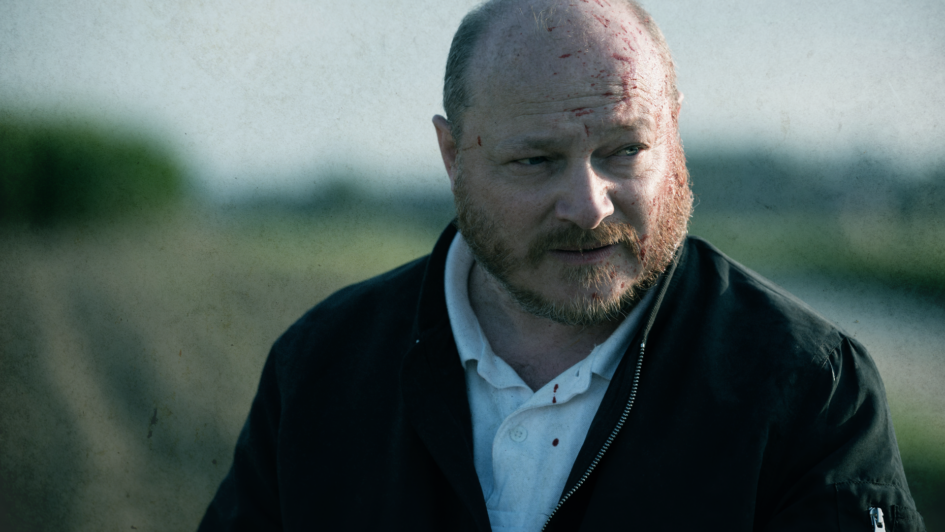
Heat of Madness follows Scola (Olivier Picard), a man preparing to become a father who hopes to secure a better future for his family by taking on one final criminal job. However, when things don’t go according to plan, Scola finds himself caught in a downward spiral of violence, betrayal and revenge.
As his journey unfolds, the lines between reality and imagination begin to blur, forcing him to confront his troubled past and the consequences of his actions. What begins as a seemingly straightforward crime thriller gradually transforms into something far more surreal, exploring themes of guilt, obsession and redemption.
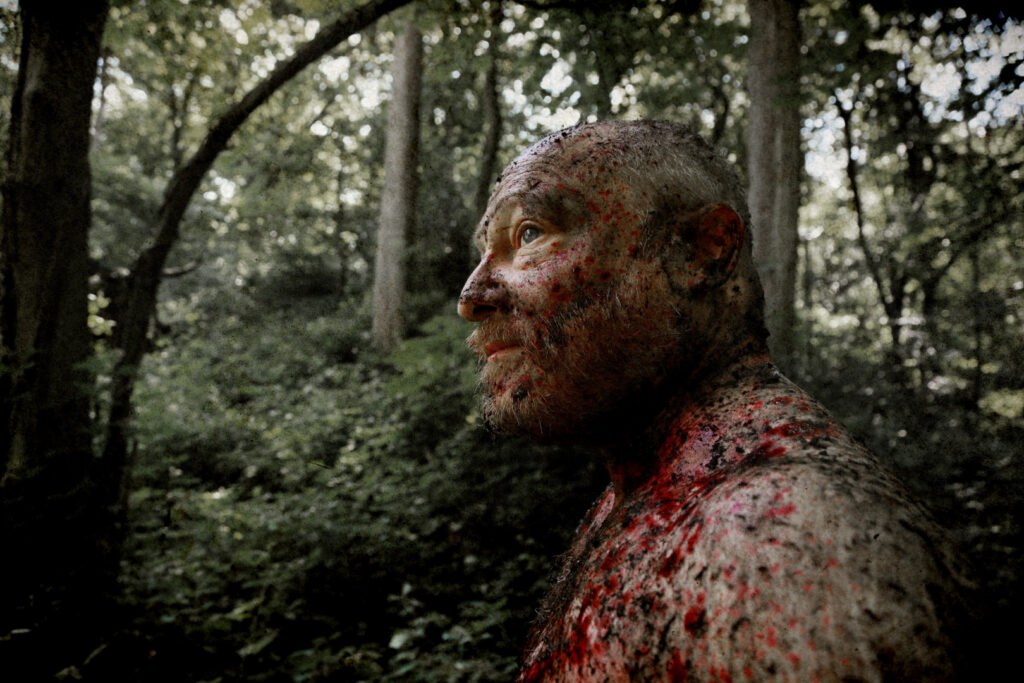
Scola (Olivier Picard) finds himself surrounded by violence in Heat of Madness (2026).
Before diving into what didn’t work for me, I want to give credit where it’s due. One of the strongest aspects of Heat of Madness is its cinematography. The film is visually impressive, with some beautiful shots and interesting camera angles. There’s an artistic quality to the presentation that makes even some of the quieter moments visually interesting.
Ouelhaj clearly has an eye for composition, and there are moments when the visuals manage to communicate more than the dialogue or narrative itself. I’m not going to pretend it’s some groundbreaking achievement in filmmaking or the most beautiful movie I’ve ever seen, but there’s no denying that it looks good.
Unfortunately, as I’ve learned from plenty of movies over the years, looking good and being entertaining are two very different things. A beautiful shot might grab my attention for a few seconds, but it takes considerably more than that to keep me invested in an entire movie. That’s about where my praise for Heat of Madness ends.
My biggest problem with the film is that I simply found it boring. Psychological horror doesn’t necessarily need constant action or bloodshed to be effective. Some of the best films in the genre take their time building tension, slowly pulling audiences into an increasingly uncomfortable situation. There’s something incredibly satisfying about a movie that gradually gets under your skin without you even realizing it’s happening.
But that tension never really materialized for me here. I never felt particularly disturbed, unsettled or even curious about what was happening. Instead of feeling like I was being pulled deeper into Scola’s increasingly troubled world, I felt like I was watching everything unfold from a distance, waiting for something to finally grab my attention.
A large portion of the movie consists of watching Scola wander from one location to another, occasionally stopping long enough for something violent to happen before continuing on his way. Now, I understand that not every scene needs to advance the plot at breakneck speed. Sometimes, allowing a character to simply exist within their surroundings can create atmosphere or give the audience time to process what they’ve witnessed. But those moments need to serve some kind of purpose.
Here, the constant wandering rarely seemed to accomplish much beyond stretching out the runtime. At times, I felt like I was watching someone trying to reach their daily 10,000-step goal rather than a psychological horror film. I kept waiting for these journeys to build toward something meaningful, but more often than not, they simply left me wondering where Scola was going and why I should care.
And that brings me to another significant problem. I never developed any real connection to Scola. To be clear, I don’t need to like a movie’s protagonist to become invested in their story. Horror is filled with terrible people doing terrible things, and sometimes watching those characters face the consequences of their actions is part of the appeal. But there still needs to be something that makes their journey compelling.
Whether it’s sympathy, curiosity, disgust or even a desire to see them get what’s coming to them, the audience needs a reason to remain engaged. Scola never gave me that reason. Even when the violence escalated, I found myself surprisingly indifferent. The film certainly isn’t afraid to show brutality, but violence without emotional investment eventually becomes little more than another thing happening on the screen.
Rather than feeling shocked or disturbed, I was mostly waiting for the story to give me something worth caring about.
Making matters worse is the film’s nonlinear storytelling. I have absolutely no problem with movies that jump around in time, especially when that approach adds mystery or gradually reveals important pieces of the narrative. Some of my favorite films use unconventional storytelling to completely change how you interpret earlier events.
There’s a certain satisfaction in watching seemingly disconnected moments finally come together and realizing that the clues were there all along. But Heat of Madness frequently left me wondering where exactly we were in the timeline and how the events connected. Rather than making me want to piece everything together, the confusion only made it harder to remain invested. I wasn’t trying to solve some fascinating mystery. I was simply trying to figure out what was happening and when it was supposed to be happening.
There’s a difference between challenging an audience and simply leaving them confused, and I felt this movie leaned too heavily toward the latter. Nonlinear storytelling can be an incredibly effective tool, but it shouldn’t become a substitute for developing characters or building an engaging narrative. When you’re already struggling to connect with the protagonist, constantly shifting the timeline only creates another barrier between the audience and the story.
By the time I reached the hour mark, my interest had almost completely disappeared. I wasn’t eagerly anticipating the next revelation or wondering what would happen to Scola. I was mostly wondering how much longer the movie had left. And for a film that wants to explore the psychological consequences of violence, guilt and obsession, that’s a pretty significant problem.
I give Heat of Madness two out of five stars.
While there’s certainly some talent behind the camera, the film seems far more interested in looking artistic than telling an engaging story. I can appreciate the ambition of trying to create something unconventional, but ambition alone doesn’t make a movie worth watching. The confusing narrative, lack of emotional connection and painfully slow pacing left me feeling more exhausted than entertained.
Psychological horror should get inside your head, challenge your perceptions or at least make you feel something. This one barely managed to hold my attention. And while I can’t say I got much enjoyment out of watching Scola wander around for nearly two hours, I’m fairly certain he managed to hit his daily 10,000 steps.
At least somebody got something out of the experience.