There’s a tiny part of me, buried somewhere between the kid who grew up checking the mailbox like it was a treasure chest and the adult who still falls for “Maybe this one isn’t junk,” that secretly hopes one day I’ll receive a mysterious letter meant for someone else. Not from a scammer in Nigeria promising me $48 million if I “just verify my bank account,” but something legitimately life-changing. A lost inheritance. A secret invitation to a hidden society. Maybe even a map leading to buried treasure, but ideally the kind that doesn’t require hiking uphill.
So, when I read the premise of Dead Mail, a movie built around a post office receiving a strange piece of mail that sets off a kidnapping investigation, that inner child perked up. Finally, a film that taps into my lifelong dream of stumbling into something big, bizarre and definitely not addressed to me.
Unfortunately, this isn’t that kind of movie.
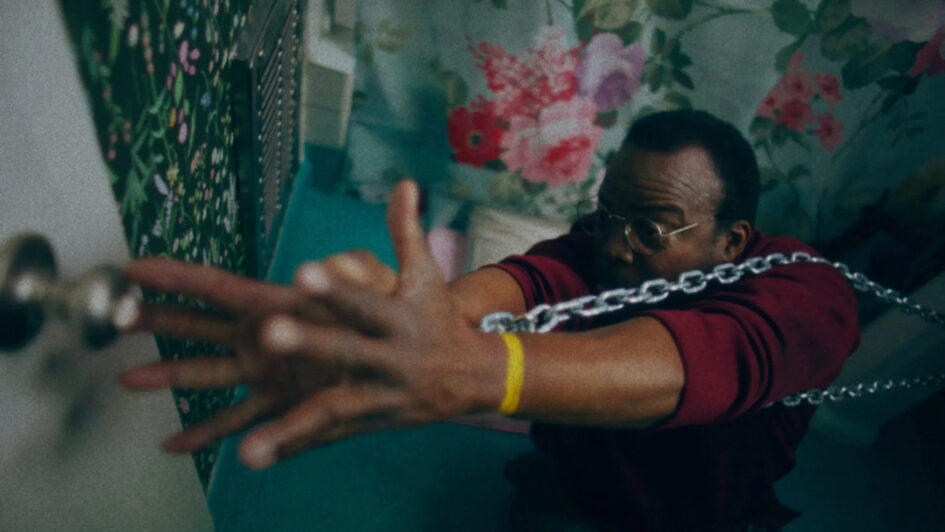
Dead Mail is an American horror-thriller written and directed by Joe DeBoer and Kyle McConaghy. The setup is simple: a postal worker receives an ominous piece of mail that hints at a kidnapping, and from there the story spirals into off-kilter tension and grim mystery. It’s the kind of indie thriller that promises atmosphere over spectacle, and in that regard, it definitely delivers. The ambiance is thick, the world-building is grimy in all the right ways and the entire movie absolutely feels more ’80s than it actually is.
But style only gets you so far when the story can’t keep the same pace.
The film stars Sterling Macer Jr. as Josh, whose quiet, isolated world gets cracked open by this unsettling letter. Macer is easily the best part of the movie. He brings a grounded, weary humanity to a role that could have easily slipped into melodrama.
John Fleck, Micki Jackson and the rest of the cast contribute to the strange, brittle world the directors are crafting. And that world is undeniably compelling at first: dingy rooms, flickering lights, a sense of paranoia hanging in the air like dust. If atmosphere alone could carry a movie, Dead Mail would’ve had me fully invested.
But the problem is simple: the movie lost me too quickly, and I couldn’t find my way back in.
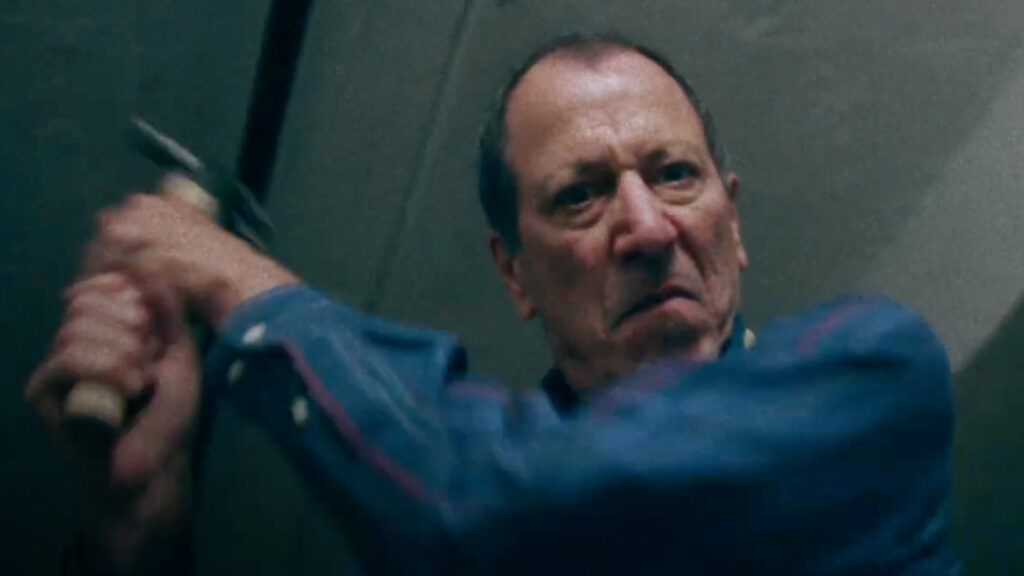
For all its strong opening minutes, the mystery doesn’t deepen so much as it tangles. Instead of unfolding into something gripping, it unravels into something murky. The film keeps hinting at a bigger revelation, a deeper conspiracy or at least a more satisfying payoff. But that moment never fully arrives. It’s not that the twists aren’t there. They just never felt strong enough to justify the slow, moody buildup.
Somewhere around the midpoint, the tension fizzles and from that point on the movie feels like it’s circling itself instead of moving forward.
And look, I am all for slow-burn thrillers. I’ve sat through enough atmospheric indies to know that sometimes you have to let the story simmer before the flavor hits. But with Dead Mail, the simmer never leads to a boil. It’s like waiting for a package that keeps updating its tracking status to “In Transit” but never actually arrives. After a while, you stop checking the box and assume the universe is messing with you.
Another challenge is tone. The film has streaks of off-kilter black comedy, and you can see flickers of that idea hiding under the shadows. But the movie never fully commits to being funny, strange or surreal enough to capitalize on that angle. Instead, it stays in this middle lane: moody, slightly eccentric, but too restrained to make the weirdness meaningful.
When movies ride that line successfully, they feel like you’ve stumbled into someone else’s fever dream. Here, it feels more like the filmmakers weren’t sure how weird they wanted to go, so they kept pulling back right when things started to get interesting.
The more the story unfolds, the more I found myself wishing the film had taken the bold swings it kept teasing. If you’re going to build a thriller around a single piece of disturbing mail, lean into the madness. Let things go off the rails. Let the world expand into something unexpected. But instead, Dead Mail slowly folds in on itself. What begins as a promising descent into paranoia becomes a quiet shuffle in circles.
And that’s ultimately why I landed at two out of five stars. Dead Mail is not a bad film. Far from it. It’s the kind of movie where you keep waiting for everything to click, for the suspense to escalate, for the tension to pay off… and it just never quite gets there. It’s a story full of potential that never fully blossoms, like an important letter that gets lost somewhere between the sender and the destination.
I appreciate what DeBoer and McConaghy were aiming for, and I genuinely admire the craftsmanship on display. But for me personally, atmosphere wasn’t enough to carry the narrative dead weight.
Still, I’ll keep checking my own mailbox, just in case. If a mysterious envelope shows up for me (no scams, please), it’ll probably lead to a more exciting adventure than the one I got from Dead Mail.