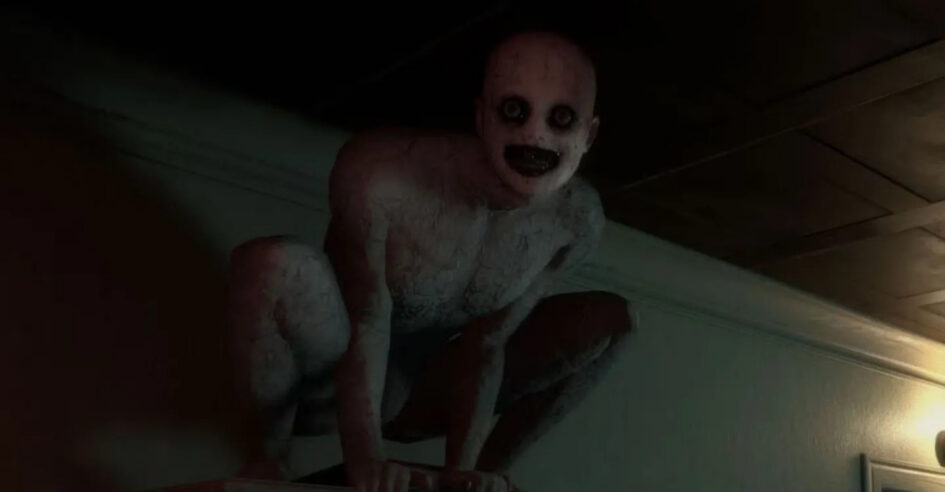
I honestly believe there are two types of people in this world: The people who think haunted attractions stop being scary once the customers leave and the people who have actually spent time inside one after hours.
A few years ago, during the offseason, I worked for Nashville Nightmare creating queue line audio. The best computer in the building was located inside the attraction’s main control room, which had been designed to look like an old funeral home, so naturally, that became my office.
One afternoon, the other builders headed out to eat while I stayed behind working. At some point, I stepped out to use the restroom, not realizing they had forgotten to disable some of the attraction’s motion sensors. Suddenly, animatronics started firing off around me in completely dark rooms. Props lunged out of the darkness while loud audio cues echoed through the attraction. I am not exaggerating when I say it scared the absolute life out of me (and removed the need to find said restroom).
That same uncomfortable feeling of being trapped alone in a funeral-home setting is exactly what The Mortuary Assistant taps into.
The Mortuary Assistant is a supernatural horror film directed by Jeremiah Kipp and written by Tracee Beebe and Brian Clarke, the latter also being the creator of the video game the film is based on. The story follows Rebecca (Willa Holland), a recovering drug addict who takes a job at a mortuary under the supervision of Raymond (Paul Sparks).
What starts as an easy overnight shift quickly spirals into something far more terrifying when Rebecca begins experiencing horrifying visions, strange entities and increasingly disturbing hallucinations. After Raymond calls to explain that demonic forces are at work inside the mortuary, Rebecca is forced into a terrifying fight to survive the night and stop whatever evil is trying to escape into the world.
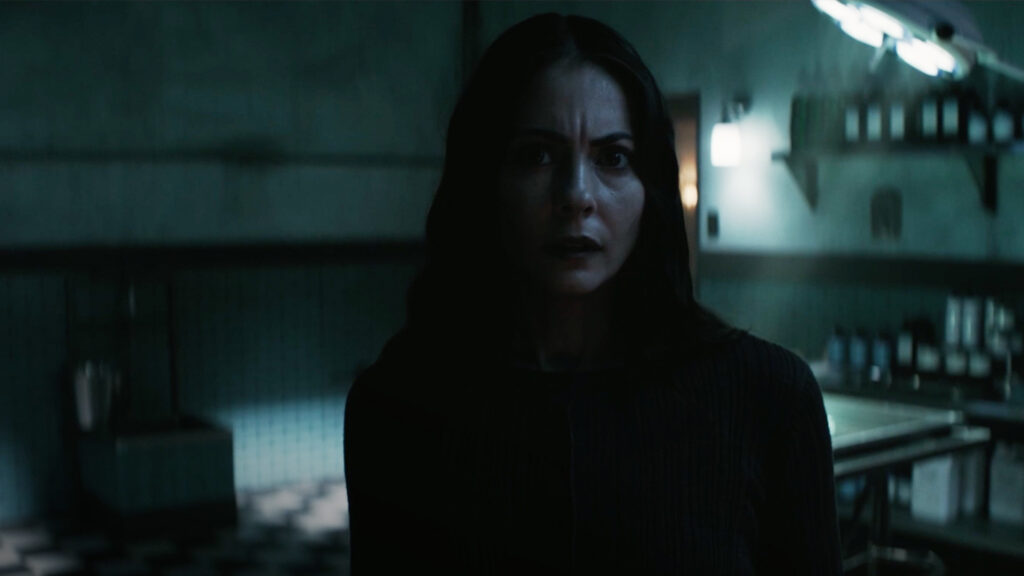
What I liked most about The Mortuary Assistant is how effectively it taps into that universal feeling of being alone somewhere at night and suddenly becoming aware of every odd sound or movement around you. It does not matter if a place feels perfectly normal during the day. Once the lights go down and you are by yourself, your brain starts turning every creak, shadow and strange noise into something sinister.
The film understands that kind of fear extremely well. A mortuary is already an unsettling location to begin with, but the movie takes that natural discomfort and slowly cranks it up until even the quiet moments feel nerve wracking. It constantly plays with the idea that maybe what Rebecca is seeing is real, or maybe exhaustion and fear are making her spiral, and that uncertainty keeps the tension high throughout the film.
I would like to say there is more that I enjoyed about The Mortuary Assistant, but unfortunately this is where the film stumbles. Willa Holland is a very capable actress, and you can tell she is trying to carry the material, but the script gives her very little room to do much beyond reacting to whatever nightmare scenario gets thrown at her next. Instead of building Rebecca into a fully realized character, the film keeps her trapped in a cycle of visions, instructions and exposition dumps.
The scares also never really land the way strong horror films need them to. There are creepy visuals and loud moments, but very few scenes that genuinely stick with you after they happen. A lot of that comes from the story feeling incredibly disjointed. The movie seems obsessed with recreating the structure and progression of the original game, but what works interactively in a video game does not always translate well into a film.
Video games naturally rely on repetition, trial and error, and completing stages to move forward. In the game, failure matters because the player can die, restart and feel the pressure of making the wrong choice. The movie, however, has to keep Rebecca moving forward no matter what happens, which removes much of the dread and sense of consequence.
Instead of building tension naturally, the film often feels like it is simply guiding the audience from one recognizable game-inspired sequence to the next.
There is also an ongoing subplot involving Rebecca’s dead father appearing to torment her, despite having died years before the events of the film. The movie eventually explains this as the form chosen by the demonic entity, but it never develops into anything particularly meaningful beyond giving the audience more hallucination scenes.
Rather than adding emotional weight, it mostly feels like another horror trope layered on top of an already overcrowded story.
I give The Mortuary Assistant two out of five stars. There are moments where the film absolutely understands the type of fear it wants to create. The isolated mortuary setting works, making an atmosphere that can be genuinely uncomfortable at times. It taps into that universal feeling of being alone somewhere after hours and suddenly questioning every sound you hear.
Unfortunately, strong atmosphere can only carry a horror film so far. Weak scares, a disjointed story and an overreliance on recreating the structure of the video game keep the movie from ever becoming as terrifying as it clearly wants to be.
It is disappointing, as there is the foundation for something creepy is absolutely there. I know firsthand how unsettling it can feel walking through a fake funeral home attraction when things unexpectedly start coming to life around you. The problem is, when that happened to me at Nashville Nightmare, it scared the absolute life out of me.
When it happens in The Mortuary Assistant, it mostly just feels like another scripted sequence waiting for the next one to begin.