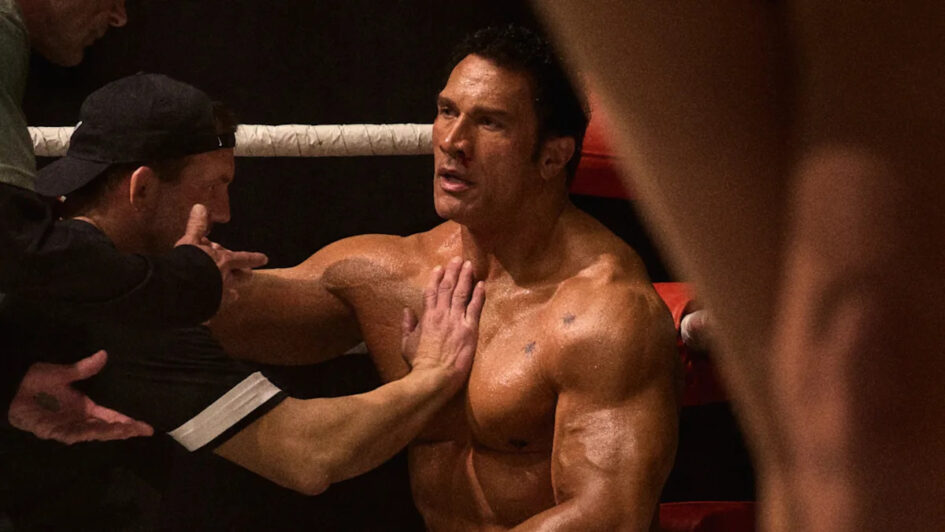
I have always been more of a casual fan when it comes to MMA. Not the kind of guy who memorizes every fighter’s reach and ground-and-pound statistics, but the kind who enjoys catching a good fight night with friends or stumbling across a highlight reel at 2 in the morning, when I should absolutely be asleep instead of watching people get kicked in the head. My interest has always lived in that sweet spot between “I know enough to sound like I belong in this conversation” and “please do not ask me to explain the scoring system.”
I enjoy the spectacle, the strategy and the moments where a fighter pulls off something so ridiculous, it burns itself into my brain forever.
My era of choice was the mid-2010s, the golden window when the UFC felt like a nonstop fireworks show. So, when a movie like The Smashing Machine shows up, promising an underworld look at the early, barely regulated days of MMA, I am immediately interested. And it does not hurt that it stars Dwayne “The Rock” Johnson.
The Smashing Machine is a biographical drama about pioneer fighter Mark Kerr, played with surprising vulnerability by Johnson, and the film presents itself as a gritty and grounded character study. Instead of leaning into a typical sports movie crescendo, it turns inward and focuses on the emotional and physical toll of Kerr’s rise. His relationship with his girlfriend, Dawn (Emily Blunt), is strained. He struggles with a growing dependence on prescription drugs. And he battles constant feelings of inadequacy, even while dominating in the cage.
The story follows his rise as a legend, while slowly revealing how that level of greatness nearly cost him everything.
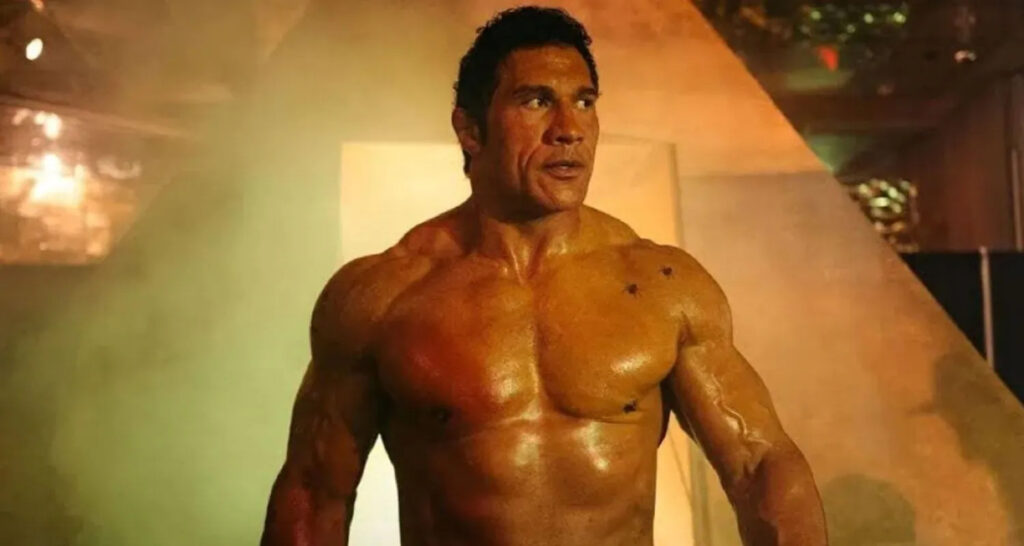
Let’s start with the biggest positive: Dwayne Johnson. This is easily one of the most interesting performances he has ever given. Gone are the raised-eyebrow smirks and the blockbuster charm. In their place is a hulking sadness, a vulnerability that weighs on every scene. Johnson completely sheds the superhero invincibility that audiences have grown accustomed to, revealing someone who is powerful in the cage, but painfully fragile everywhere else.
This is the kind of role you can tell he has been waiting for, something raw and human that allows him to play broken instead of bulletproof. If you have ever wondered what he could do if he stopped being The Rock and simply let himself act, this movie gives you the answer.
The cinematography supports him every step of the way, blending gritty handheld shots with stark, quiet close-ups that emphasize how small and overwhelmed Kerr feels within his own life. The fight scenes look fantastic. There is no glossy Hollywood choreography here, but messy, close-quarters brutality that feels faithful to MMA’s early years. Sweat, blood and exhaustion have rarely felt this tactile in a sports drama. The camera lingers on breaking bodies, lonely hotel rooms and the harsh fluorescent light of late-night gyms, creating exactly the atmosphere this story needs.
But here is the problem: the movie does not have the narrative depth to match its visual style or its lead performance. For all the emotional heaviness, the story stays frustratingly surface level, hitting the same themes repeatedly without evolving them. Addiction, pressure, fractured relationships — these are presented clearly, but never explored with much complexity. It feels as if the film wants credit for acknowledging these issues without doing the hard work of digging into them.
Kerr’s pain and self-destruction are shown, but rarely contextualized. We see the symptoms, but not the roots. We understand the fallout, but not the emotional blueprint that shaped him into the man we are watching. For a character study, that missing layer hurts.
The pacing only makes this more noticeable. The film drags when it should move and rushes past moments that deserved room to breathe. Long stretches feel repetitive, circling the same emotional territory without adding anything new. It often resembles a slow clinch against the cage in a five-round fight, waiting for the referee to break it up. Scenes that should hit like a takedown instead land like a jab you saw coming a mile away. There is an uneven rhythm to the entire story, as if the movie knows the emotional tone it wants but cannot quite figure out how to reach it.
This uneven pacing ultimately clashes with Johnson’s performance. When the script gives him something meaty, he devours it. When the script wanders, his intensity starts to feel stranded, as if he is acting in a deeper and more thoughtful film than the one around him. You can feel him pushing, reaching, trying to elevate the material, but the story keeps handing him the same emotional beats over and over. The result is an awkward tug of war, where the movie wants to be a bruising psychological portrait, but keeps flattening everything into a loop of “he is struggling, he is hurting, he is spiraling” without adding nuance.
It constantly threatens to be great, but keeps getting in its own way.
I give The Smashing Machine three out of five stars. By the end, the film becomes a strangely lopsided experience. The performances are strong, the visuals are striking and the subject matter is compelling, yet the story never digs deep enough to justify the emotional weight it attempts to carry, and the pacing makes the entire experience feel longer and more repetitive than it should. You can see the better version of this movie hiding just beneath the surface, the version Dwayne Johnson clearly arrived ready to make, but it never fully emerges.
As a casual MMA fan who remembers the mid-2010s era of big personalities, bold storylines and unforgettable fights, I found myself wishing the film brought the same sense of energy and fire that drew me into the sport in the first place. Instead, it settles into a holding pattern that limits Johnson’s strongest work. There is plenty to appreciate, especially if you enjoy the raw physicality of early MMA, but the shallow narrative and its uneven rhythm keep the film from landing the knockout it was aiming for.