
Very recently, my wife and I were driving when we started talking about adding a parking pad to our driveway. Neither of us had ever really considered it before. It was just one of those out-of-the-blue conversations, and since we were on the road, neither of us looked anything up. We talked about it and went on with our day.
The next morning, my Facebook and Instagram feeds suddenly had ads for concrete paving companies. Well, that’s weird.
I don’t know what connected those dots, but the timing was enough to make me wonder how much my phone knows about me. It’s a strange feeling when a private conversation becomes a sales pitch overnight. I’m used to my phone remembering what I’ve searched for. Having it appear to know what I’ve only talked about feels a little more unsettling.
That everyday sense of unease makes a fitting introduction to Kyle Mangione-Smith’s Compliance, which screened at the 2026 Nashville Film Festival and takes the feeling of being watched into much darker territory.
Compliance is a horror film that combines found footage and screenlife storytelling, unfolding through surveillance cameras, phone recordings and computer screens. It centers on Sam Cornell (Megan Wilcox), a young crisis manager working for a tech startup called UVisit. When a sexual assault at one of the company’s rental properties threatens to derail a multimillion-dollar deal, Sam is tasked with containing the fallout.
However, the victim, Sarah (Lindsey Normington), refuses to accept the company’s offer of money in exchange for her silence.
Caught between Sarah and bosses who expect a quick resolution, Sam finds her own job in jeopardy. Her attempts at damage control draw her into a much larger conspiracy involving a shadowy organization targeting UVisit and its investors.
As she struggles to understand whom she can trust, Sam unwittingly becomes a pawn in a deadly game.
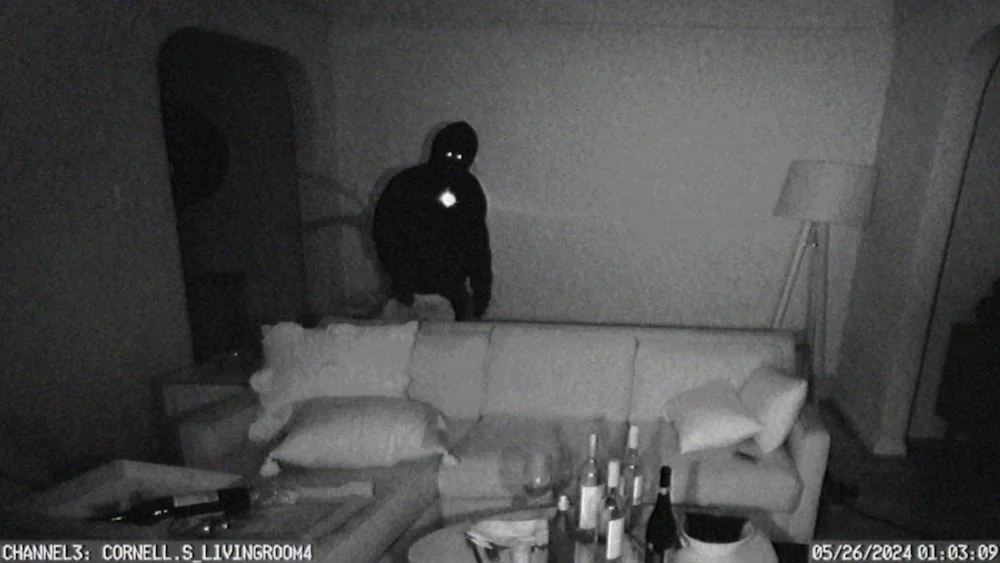
The premise of Compliance is what first drew me in. We live in a world where surveillance has become so commonplace that it’s easy to stop noticing it. Cameras are on our doorsteps, in our businesses and in the phones we carry everywhere. The film takes that familiar reality and explores the frightening possibilities of surveillance without limits or accountability. For me, the unsettling part is wondering who has access to all that footage and what they might choose to do with it.
Compliance also explores the political fallout from both left and right perspectives, raising questions about who controls this information and how they use it to advance their own interests. That adds another intriguing layer to the story. The thought of being watched is unsettling enough without wondering whose agenda you might become a part of.
I also found the film’s visual style intriguing. Compliance pieces its story together through CCTV footage, webcams, screen-sharing technology, podcasts, bodycams and helicopter cameras. That variety gives us different ways of watching the events unfold while reinforcing the film’s concerns about surveillance. There’s something unsettling about realizing just how many lenses can capture a single story, often without the people involved having any say in it.
That same intriguing style also becomes one of the film’s drawbacks. I sometimes had trouble following the logic behind the footage choices and how they fit together. It reminded me a little of Buffet Infinity, but some of the cuts in Compliance felt questionable, interrupting the flow and making the story harder to follow. I appreciated the ambition behind the approach, even when the editing pulled me out of the film.
Sensory overload is another problem. Some scenes combine footage from multiple points of view on the screen at once, and I found myself struggling to decide where to focus. There’s also a rapid-fire montage that becomes difficult to watch. I understood the intent to overwhelm, but that didn’t make the experience enjoyable. Instead, it became harder to stay connected to the story when I was putting so much effort into processing the images.
The ending left me confused and unsatisfied. Maybe the issues with the editing and sensory overload contributed to that, but I struggled to make sense of how it all came together. I even considered going back and rewatching a few scenes to see what I might have missed. Ultimately, though, I wasn’t invested enough in any of the characters to feel it was worth revisiting.
I give Compliance two out of five stars.
Its premise and approach to surveillance horror intrigued me, but the disjointed editing, sensory overload and confusing ending made it difficult to stay invested. There are interesting ideas here, but I wanted a clearer story and characters I cared about enough to follow through the chaos.
As unsettling as those concrete paving ads were the next morning, at least I could tell what they were trying to sell me.