
I’ve been working in the haunted attractions industry for almost two decades now, and Pennhurst is a name I’ve heard plenty of times over the years. It’s always been spoken of as one of the top haunts in the country, though I’ve never had the chance to make the trip, myself. When you spend that long in this business, certain places end up on your list of attractions you want to experience, and Pennhurst has been on mine for a while. I’m always curious to see how other crews approach the same work I know so well, especially somewhere with that kind of reputation.
I also knew about its reputation for actually being haunted, much like The Waverly Hills Sanatorium. There’s something especially intriguing about a haunted attraction where the ghost stories don’t stop when the actors clock out. Knowing that a place has a history beyond its sets and costumes adds another layer to the experience.
That combination first drew my attention to The Haunting of Pennhurst, which screened at the 57th Nashville Film Festival.
The Haunting of Pennhurst is a documentary about the former Pennhurst State School and Hospital in Spring City, Pennsylvania. Originally known as the Eastern Pennsylvania State Institution for the Feeble-Minded and Epileptic, the state-run facility opened in 1908 to house people with intellectual and developmental disabilities. After decades of controversy, abuse and deteriorating conditions, it closed in 1987.
Some of its buildings have since been preserved and reopened as Pennhurst Asylum, an annual haunted attraction. The documentary takes us behind the scenes as the staff prepares for another season, weaving in the institution’s disturbing history and the atrocities committed against its residents.
It also explores the site’s use for paranormal gatherings, blending these elements into a look at Pennhurst’s past and present.
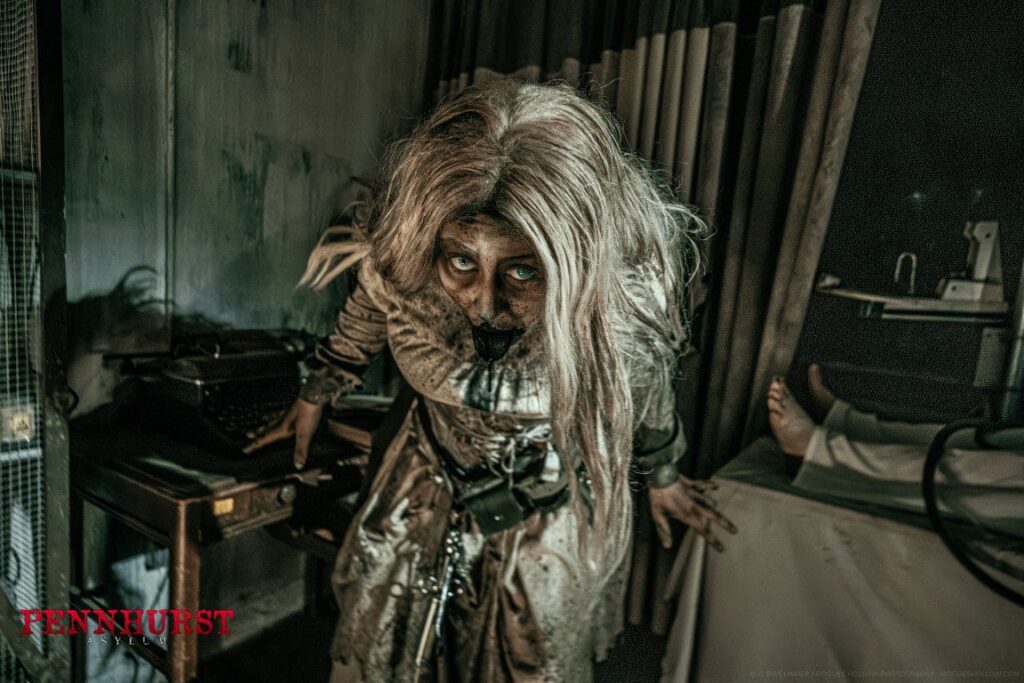
via Pennhurst Asylum
One thing I liked right away was the look behind the scenes at the haunted attraction. Watching the crew film commercials and build sets brought back memories of my own off seasons working at haunted houses. Sometimes that meant squeezing into dark, cramped spaces to get something done. Other times, it meant working outside in the blistering Tennessee heat. There’s a lot of work that goes into getting a haunt ready before the first customer ever walks through the door, and I recognized plenty of it here.
These are the parts of the job that customers rarely think about while walking through a finished attraction. For me, though, seeing that preparation was part of the fun.
Once the documentary gets into hiring and staff training, it becomes even more familiar. The sometimes-overzealous new hires, going over the rules of engagement with customers, explaining schedules and finding out whether anyone has makeup allergies are all things I’ve been around countless times. Those details might seem ordinary, but that’s exactly why I enjoyed them. Enthusiasm is great, but everyone still has to understand how the show operates and what is expected of them.
It was refreshing to see such a real look at the business and all the preparation that goes into a night of scaring people.
I also really liked how seamlessly the documentary moves between the manufactured scares of the haunted attraction and the real horrors of Pennhurst’s past. Watching the staff prepare to frighten willing customers takes on a different weight when you learn what the people who once lived in those buildings endured. The film gives both sides room to tell their stories, and the transitions never felt forced.
As much as I enjoyed the familiar behind-the-scenes moments, the history kept me aware that these buildings were much more than a setting for a Halloween attraction. That balance worked incredibly well, allowing me to appreciate what goes into the haunt while still taking in the suffering that happened there.
The section featuring a paranormal exploration convention didn’t work quite as well for me. It fits into the larger story of how Pennhurst is used today, but it still felt a little out of place alongside the history and the work going into the haunted attraction. Some of the people shown also seemed unaware of, or insensitive to, the pain the former residents endured, treating it more like a ghost story or a joke than something that happened to real people.
After hearing about that suffering, those moments were hard to sit with. Thankfully, the film doesn’t spend much time on the convention, so while it put a bit of a damper on the experience, it wasn’t enough to take much away from the documentary overall.
I give The Haunting of Pennhurst five out of five stars.
After almost two decades in the haunted attractions industry, so much of this documentary resonated with me. I came for a look inside a haunt I’ve wanted to visit for years, and I found plenty of familiar moments, but the history of the people who lived there is what gave the film its weight. It left me with a deeper appreciation of the responsibility that comes with telling Pennhurst’s story.
I still want to experience the attraction for myself, but when I finally walk through those doors, I’ll have much more on my mind than the next scare.