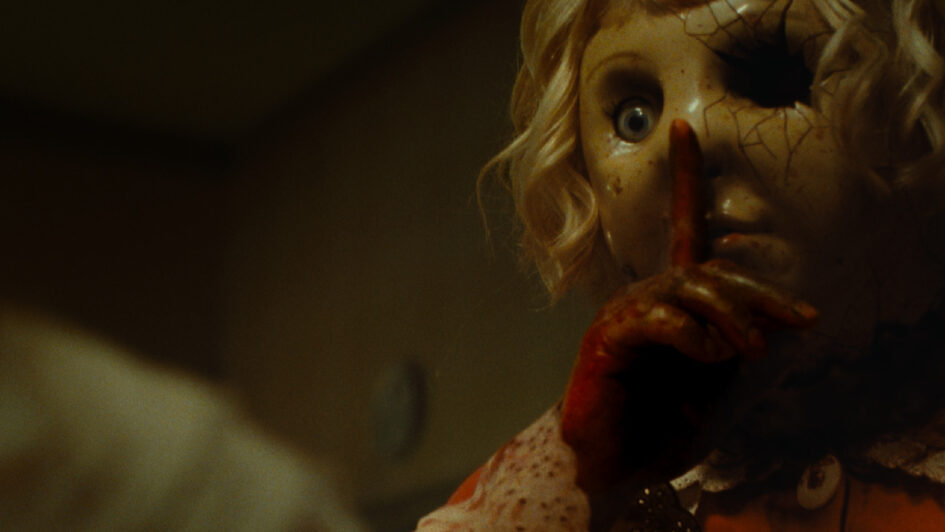
There is something profoundly unsettling about innocence being warped into unbridled violence. As someone who has spent a lifetime immersed in horror movies, comic books and even professional wrestling, I’ve always found that the villains who embody this contradiction often turn out to be the most tragic. They aren’t born monsters — they’re broken into becoming them. Take WWE’s Eugene, for example: a mentally challenged man who adored wrestling and cherished being the ultimate good guy, only to be manipulated by his uncle Eric into doing cruel and harmful things. Or consider Bucky Barnes, the Winter Soldier — once Steve Rogers’ loyal best friend, turned into Hydra’s brainwashed assassin against his will.
And then, of course, there’s the most infamous of them all: Leatherface from The Texas Chain Saw Massacre. Behind the grotesque mask and the roar of the chainsaw is not a calculating mastermind, but a hulking figure with the mind of a child, forced into brutality by a family that exploits his innocence. These kinds of characters linger because they blur the line between fear and pity, making us question whether we’re horrified by their actions or heartbroken by what made them that way.
At Fantastic Fest 2025, director Rod Blackhurst introduced audiences to his latest nightmare, Dolly. The film begins innocently enough, with Chase (Seann William Scott) and Macy (Fabianne Therese) heading out on a romantic hike, where Chase plans to propose. But their idyllic moment is shattered by the eerie sound of children’s toys echoing from deep within the woods.
Drawn to investigate, they stumble upon a grotesque shrine of dolls — and the hulking figure who created it, Dolly (Max “The Impaler” Lindsey). From there, escape proves impossible. Macy is captured and forced into Dolly’s twisted game, transforming into the next “toy” in an ever-growing collection. To survive, she must navigate not only her captor’s delusions, but also the suffocating grip of Dolly’s family trauma.
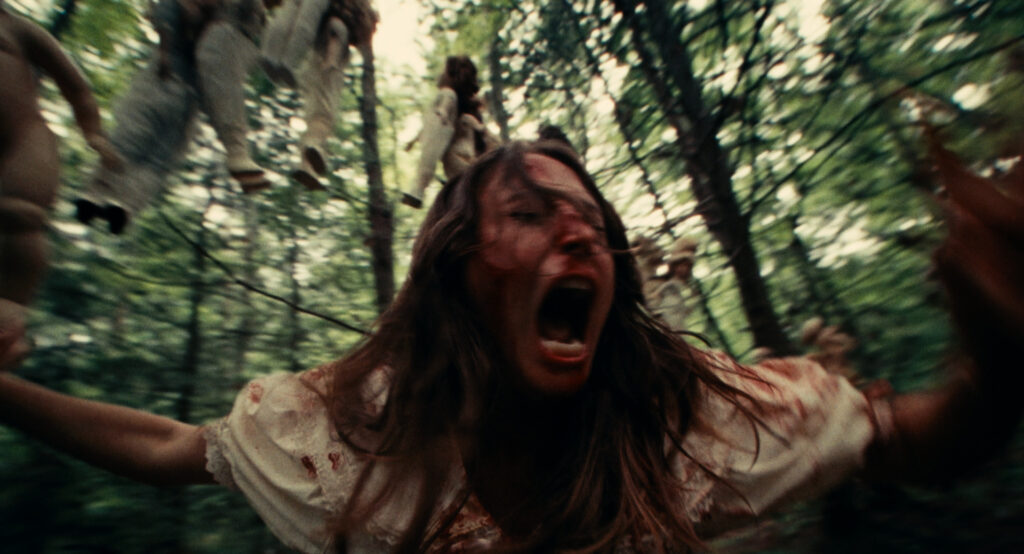
Dolly was shot entirely on 16mm film, a bold creative choice by Rod Blackhurst that pays off in every frame. The grain and texture of the format lend the movie a raw, tactile quality, grounding its horror in something that feels uncomfortably real. Shadows bleed into the edges of the screen, colors carry a muted warmth that contrasts the brutality on display, and the imperfections of the medium give the whole film a sense of unearthed authenticity — like you’ve stumbled across a forgotten relic from the grindhouse era.
In an age where so much horror is polished and digital, this analog grit becomes its own character, amplifying the unease and making Dolly’s world feel all the more claustrophobic and nightmarish.
This decision, combined with the unsettling presence of the titular character, creates a clear homage to the original Texas Chain Saw Massacre. The gritty 16mm aesthetic mirrors the raw, documentary-like feel that made Tobe Hooper’s classic so unnerving, while Dolly’s hulking frame and childlike mannerisms echo the tragic terror of Leatherface. It’s not a carbon copy, but rather a spiritual nod — a way of channeling that same chaotic, grimy energy into a modern context.
By fusing the analog texture of film with a villain who is both terrifying and pitiful, Blackhurst taps into the primal horror that defined TCSM, reminding viewers why that style of storytelling continues to endure.
The cast of Dolly is kept intentionally small, yet the film devotes nearly all of its attention to just three characters. At the center is Fabianne Therese, who delivers the standout performance. She embodies a well-defined final girl, enduring relentless pain and humiliation for much of the runtime before clawing her way toward the strength needed for the climactic showdown. By contrast, Seann William Scott — easily the most recognizable and seasoned name in the lineup — isn’t given much space to shine. His role is serviceable but limited, positioning him more as a supporting presence than a true co-lead.
Meanwhile, Max Lindsey gets thrown into the physical demands of Dolly, relying heavily on pantomime and guttural shrieks. It’s a performance that leans more on raw physicality than nuance, but it anchors the menace of the character, nonetheless.
When it comes to special effects, Dolly wisely leans on practical rather than digital, and that choice feels like a breath of fresh air in today’s horror landscape. Not every moment lands — one particularly exaggerated effect involving Seann William Scott pulled me out of the scene almost instantly — but for the most part, the gore is handled with creativity and grit. The film calls back to an earlier era of horror, when effects teams had to invent clever, hands-on tricks to make the blood and carnage come alive.
It may not have the polished sheen of modern CGI, but that raw, handmade quality adds to the film’s charm. The effects team behind Dolly deserves recognition for embracing that old-school artistry and pulling it off with conviction.
I give Dolly four out of five stars. As a fan of the raw, grimy horror of the ’60s and ’70s, this film scratches an itch that so many modern genre entries ignore, leaning on practical effects and analog grit instead of digital polish. Fabianne Therese carries the story with conviction, embodying a final girl who feels authentic in her suffering and resilience. Seann William Scott, despite being the most familiar face in the cast, is underutilized and fades into the background, leaving much of the emotional weight on Therese’s shoulders.
Where Dolly truly stands out is in its effects work — messy, tactile and brimming with the kind of creativity that defined horror’s golden age. And much like Leatherface in The Texas Chain Saw Massacre, the titular villain embodies a mix of brute force and broken innocence that lingers long after the credits roll. Blackhurst hasn’t just made another horror movie; he’s crafted a modern echo of the classics, one that reminds us why those monsters from decades past still haunt us today.