I have always been fascinated by the little snap judgments people make when they think no one is watching. Growing up, I saw it all the time. Someone would clutch their purse a little tighter when a stranger walked by, or a teacher would assume the loud kid was trouble before he even opened his mouth. It was never the dramatic-movie version of racism where people shout insults on street corners. It was the quiet kind, the kind that hides in sideways glances and seemingly harmless assumptions. The kind you often do not even notice you are participating in until someone points it out.
When I sat down to watch Zootopia 2, I found myself thinking about those moments again. In this world of talking animals and climate-controlled city districts, reptiles are treated as the ones who should not be trusted, the ones who must be watched more closely. And it reminded me, in a gentle animated way, how easy it is for people to believe a story about someone simply because it is the one they were taught.
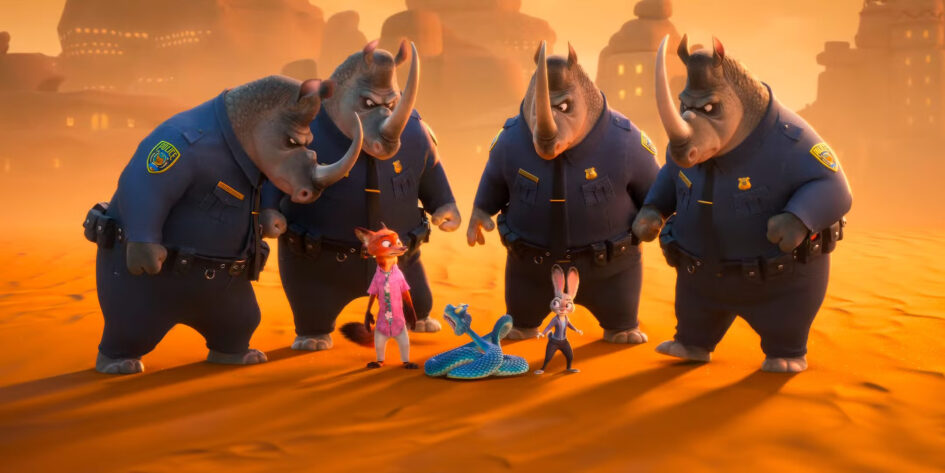
Zootopia 2 picks up shortly after the events of the first film. Judy Hopps (Ginnifer Goodwin) and Nick Wilde (Jason Bateman) are still the newest and most scrutinized team on the police force. When a bust goes sideways, Chief Bogo (Idris Elba) pulls them off duty and sends them to partnership therapy. Judy sees it as a punishment, Nick sees it as an annoyance, and both want a chance to prove themselves. That opportunity arrives when Judy stumbles across a discarded snakeskin and her need for answers kicks into high gear.
The clue leads them to a centennial gala hosted by Milton Lynxley (David Strathairn), where an ancient journal created by Ebenezer Lynxley is on display. The book details the creation of Zootopia’s districts and the secrets behind the world’s climate and geography. Judy’s instincts prove right when a snake named Gary (Ke Huy Quan) attempts to steal the journal while insisting he only wants to reveal the truth.
In the chaos that follows, Judy and Nick are accused of helping him and suddenly find themselves fugitives who must uncover what the Lynxley journal is hiding.
The movie’s mix of humor, action and its underlying thematic thread about prejudice and marginalization works far better than expected for a family film. Much like the first movie used predator and prey dynamics to explore fear and bias, this sequel focuses on a quieter, more insidious kind of discrimination.
Reptiles are treated as lesser by many of the mammals in Zootopia, seen as cold blooded in every sense, as animals who cannot be trusted and who must always have an angle. The film shows how that mindset slips into daily life through jokes, suspicious looks and “better safe than sorry” comments that eventually turn into unspoken rules.
What really works is how the film blends this theme into its story without slowing down the fun. The action scenes still pop, the jokes land, and the adventure keeps moving, but beneath it all is a reminder of how easily a society can decide that a group does not belong. The movie never becomes heavy handed and never pauses to lecture. Instead, it lets characters like Gary illustrate how being labeled a troublemaker long enough eventually makes others believe it, whether it is true or not.
It is a surprisingly thoughtful thread for a sequel that could have coasted on nostalgia, and it gives the movie the emotional weight it needs.
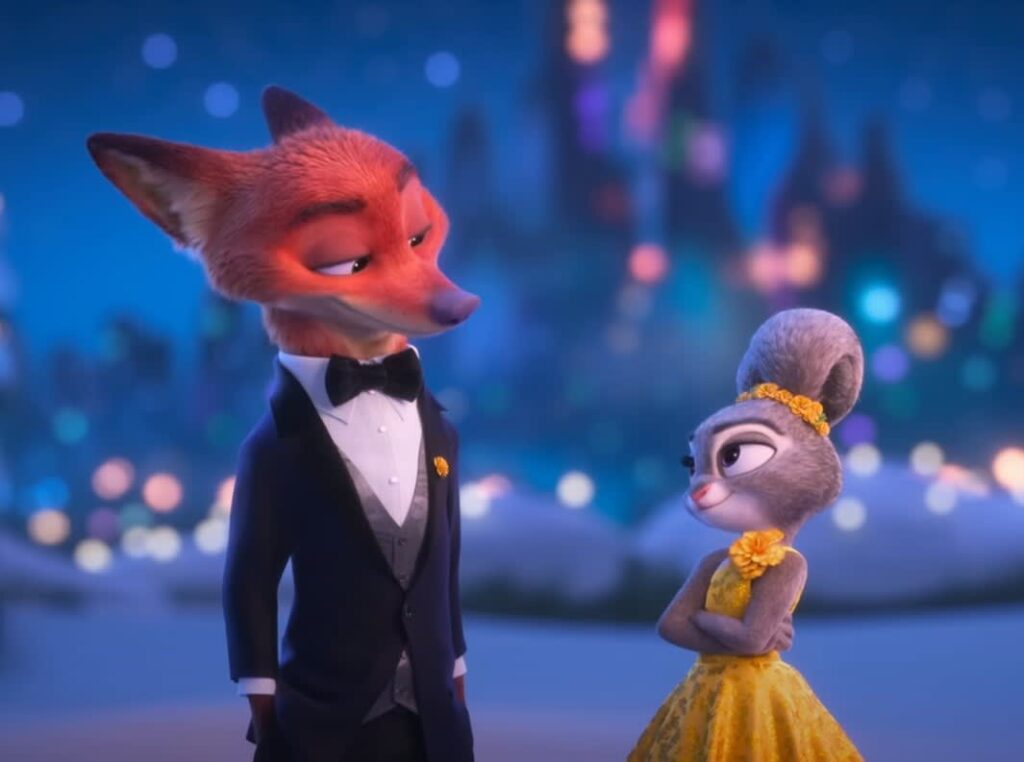
The strong core relationship between Judy and Nick continues to carry the franchise and remains one of its biggest strengths. Judy is still the energetic rule-loving optimist who wants to believe in the system, while Nick brings his relaxed charm and street-smart skepticism to balance her out. Their dynamic feels natural and lived in, the kind of connection that forms only after two people survive something life changing together. The sequel puts real pressure on that bond by forcing them into a situation where their ideologies are challenged and their trust is tested.
What makes their partnership shine is how much faith still exists beneath their disagreements. Judy wrestles with the tension between her instincts and the laws she swore to uphold, and Nick reminds her that doing the right thing is not always the same as doing what is expected. Their banter stays sharp, their teamwork stays effortless and even their quieter moments carry genuine affection and respect. No matter how wild the chase scenes get or how mysterious the Lynxley journal becomes, the film never loses sight of how essential their partnership is.
The biggest issue holding Zootopia 2 back is that its structure and pacing make the third act’s twists feel obvious long before the movie gets there, which undercuts the supposed big reveal for anyone paying attention. The story lays out its clues with such clarity that the audience often finds itself several steps ahead of the characters, and instead of building suspense, the film settles into a predictable rhythm where you can sense exactly when the next shift will happen.
The journey is still entertaining and the emotional beats still land, but when the climax arrives, it feels less like a surprise and more like a confirmation of what you already suspected. It does not derail the film, but it does soften the impact of a story that clearly wants to hit harder.
I give Zootopia 2 four out of five stars. In the end, the film succeeds because it understands that the smallest assumptions can have the biggest consequences, a point that mirrors the quiet, everyday prejudices I mentioned at the start. Its colorful world and talking animals serve as a reminder that the stories we inherit are not always the ones we should believe. Despite some predictable beats and a third act that plays things a little too safely, the movie’s heart, humor and thoughtful exploration of bias make it a worthy return to this world.
Judy and Nick remain one of Disney’s strongest duos, and their journey toward understanding the truth beneath the surface gives the sequel the emotional weight it needs.