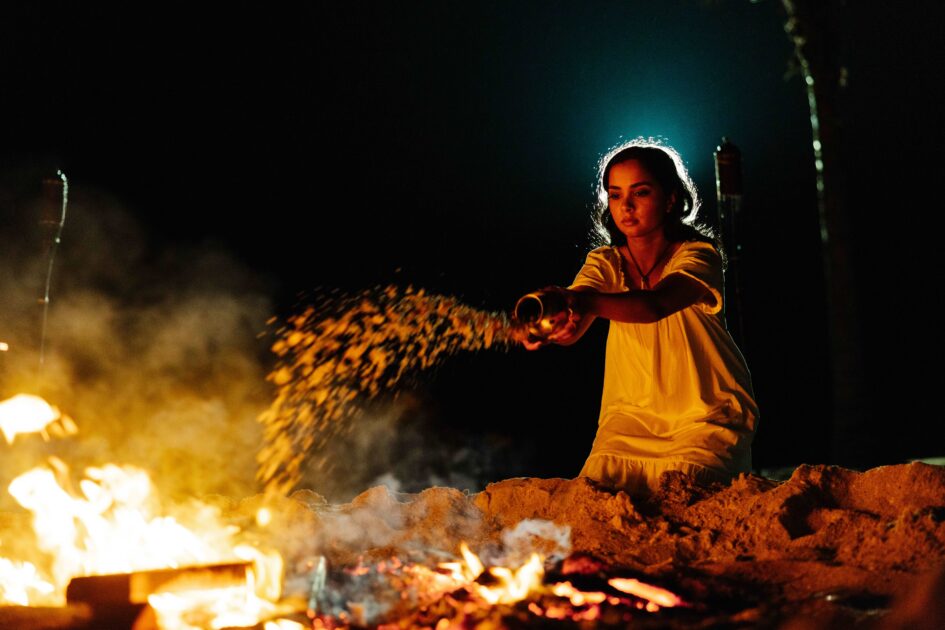
Horror films come in all sorts of shapes and sizes through a variety of subgenres, so when a supernatural story blending South Asian mythology with psychological terrors made some noise in the film festival circuit and, in the process, became the first Indian film to host a panel at New York Comic Con, my attention was fully focused on Mala, which is currently available on select streamers and arrives on Tubi starting on August 7th.
Produced by the mother-daughter team of Indigo and Nisha Sabharwal, this Indian horror film delves into the ancient art of tantra, which has been misunderstood by many throughout the years.
As the film begins, Reema (portrayed by Indigo Sabharwal) and three friends find themselves on a boat to Sanskara (as told, translates to “a rite of passage”), an abandoned tropical island resort in the middle of nowhere for relaxation and self-reflection for a week. Apparently, she has inherited the island, resort and all, from an aunt, who has recently died of mysterious circumstances. The group’s intended plan of enjoying the beachfront property after doing some spring cleaning quickly gets derailed after experiencing some supernatural shenanigans.
Attempting to make sense of it all, these outsiders soon learn that an inheritance comes with a terrifying price.
“Tantra has two sides: It can be used for good… or for evil.”
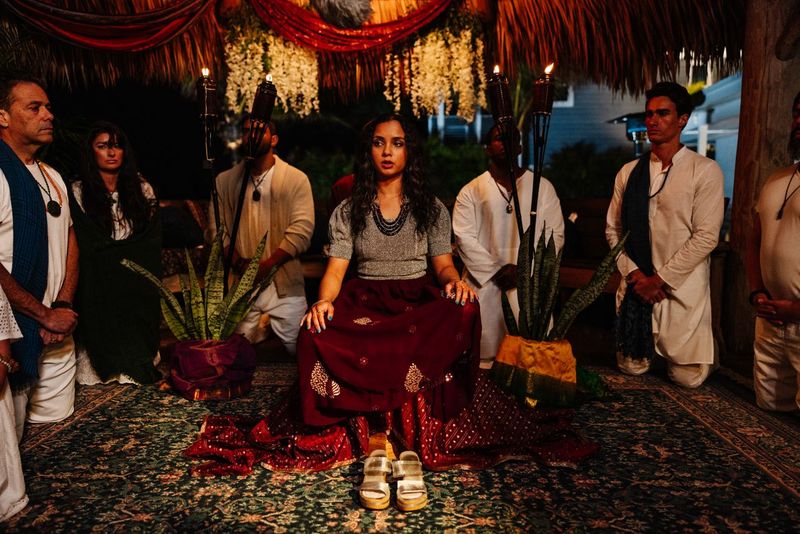
First of all, I was thrilled to learn about this film’s genre elements. Granted, I haven’t seen too many Indian horror films hitting the Hollywood circuit lately (and I haven’t really dipped my toes into Bollywood, either, for that matter), but this is exactly the type of indie movie that I enjoy celebrating. Located on a disconnected island with no phone, no internet and no TV service, this is isolation horror at its finest.
As a fish-out-of-water story, our heroes soon learn about dark rituals and the suffering they bring. But the true star of the story is the mystical tantra, which seems to influence every aspect of director Trishul Thejasvi’s feature-film debut.
Attempts at attaining higher levels of tantra are ideal, but they can lead some people down a dark path. This is where Mala, as a movie, shines, as a shroud of darkness envelops the entire tropical island. Symbols seem to appear everywhere the camera turns, and I’m sure people familiar with the tradition will recognize them much sooner than I did, but the strange visions (as well as the immediate memory lapses) our main characters experience are clear cause-and-effect situations. Other items could foreshadow bad luck, but I did not realize them the first time around — it seems our main characters didn’t realize them, either.
Things are not what they seem on this island and black magic may be to blame, which only Reema can remove. So, what happens if the darkness is embraced?
Mala is a film about family ties, sacrifices and embracing the unknown, even when the skeletons hidden deep within the closet escape; however, its slow-burn story takes a turn for the worse in the third act, where this creepy, chilling world loses momentum as Reema overcomes her past and embraces her ultimate destiny.
No jump scares are necessary, although the traumas inflicted onto the sacrificed victims feel great. Without venturing into spoiler territory, it’s Reema’s change that’s a little too abrupt, which doesn’t receive enough attention. Clearly, powers of darkness are working overtime, and the islanders are truly helpless, but there’s really no pushback for the good guys, whatsoever. Then the movie ends. That’s definitely a story problem.
Overall, the movie’s cinematography is beautiful, and its mythology really works for its setting. Foreigners fighting the good fight against dark forces of a foreign land creates decent tension, I just didn’t love the conclusion.
You don’t need an invitation to check into Mala, watching it might actually be your doorway into enjoying a variety of international horror films, which I highly recommend. But beware your dark fate!
“Born from the ashes of fire, you are Mala!”