I have spent a large portion of my life pretending to be things I am very much not. In middle school, I pretended I understood whatever band everyone else suddenly swore had “changed their life,” nodding along like I’d memorized the album when, in reality, I’d maybe heard one song on the radio and absolutely hated it. In my 20s, I pretended I understood wine, swirling glasses and saying words like “earthy” and “notes of oak,” all while praying no one asked me to explain what that actually meant.
And for years, I pretended I was the kind of person who had their life neatly color coded, emotionally balanced and confidently moving forward, when most days I was just improvising and hoping no one noticed the panic happening underneath my “grin of steel.”
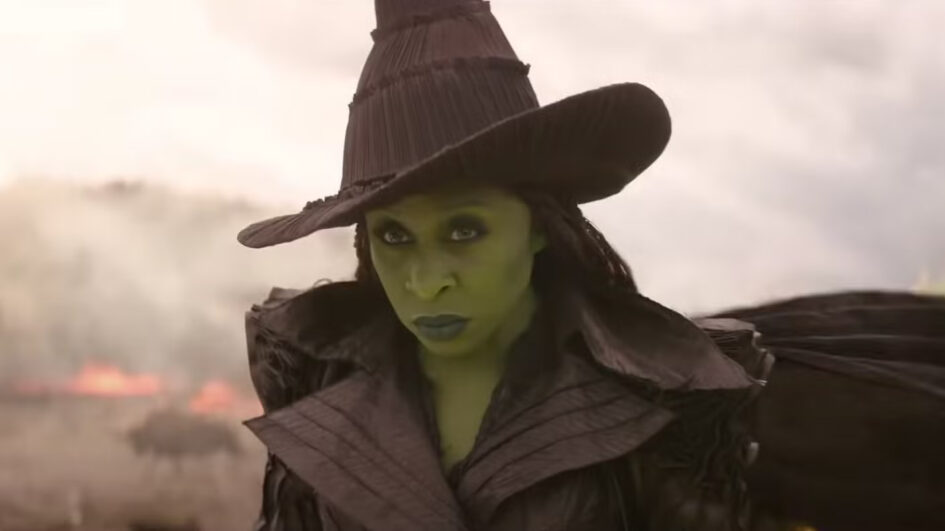
Which brings me to Wicked: For Good, a film that understands pretending, not as a flaw, but as a survival skill. Elphaba does not simply get mislabeled as wicked. She makes the conscious decision to become the villain in the public eye because it is the only way to fight the Wizard’s grip on power from the outside.
She accepts being hated, hunted and misunderstood so that someone far worse can be exposed. It is a story about choosing how you are seen, even when that choice costs you everything, and about the lonely kind of courage it takes to let the world despise a version of you if it means doing what you believe is right.
Wicked: For Good picks up shortly after the events of the first film. Elphaba (Cynthia Erivo) remains committed to fighting for animal rights while living on the fringes of Oz, fully cut off from the life she once imagined. Glinda (Ariana Grande), meanwhile, has stepped completely into the spotlight, becoming the Wizard’s official spokesperson and the smiling, polished face of his regime.
Her rise is capped with a very public engagement to Fiyero (Jonathan Bailey), now the Captain of the Gale Force, cementing her status as Oz’s golden girl.
Elphaba’s situation could not be more different. Officially branded the Wicked Witch of the West by Madame Morrible (Michelle Yeoh), she is now Public Enemy No. 1, blamed for unrest and chaos across the land. She is hunted, feared and reduced to a symbol of evil rather than a person.
But the Wizard (Jeff Goldblum) is not finished with her, yet. He has a plan that would bring Elphaba back into the system she despises, offering her legitimacy, influence and a chance at redemption, provided she is willing to play by his rules.
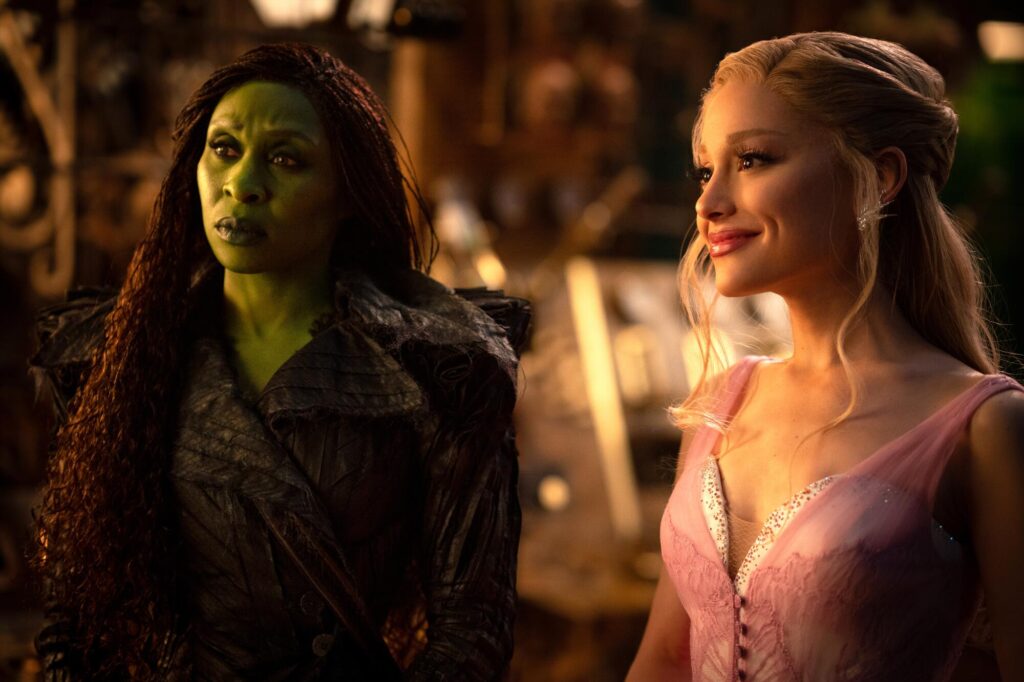
One of the film’s greatest strengths is how confidently it deepens the emotional fallout of the first installment, instead of simply trying to outdo it with visuals. Cynthia Erivo is given more room to let Elphaba breathe, showing the toll that isolation and conviction can take when you refuse to fall in line. Her performance leans into the exhaustion of being right in a world that values comfort over justice, and the film allows that weight to sit instead of rushing past it.
Ariana Grande’s Glinda is also far more compelling here. No longer just the bubbly counterpoint, she is trapped inside the image she helped create, basically weaponized by the Wizard as living proof that everything in Oz is perfectly fine. Grande plays the growing cracks beneath that perfection beautifully, turning Glinda’s constant smile into something increasingly nothing more than a facade.
Visually and musically, Wicked: For Good largely delivers. The production design remains lush and theatrical without losing its cinematic scale, making Oz feel vast while still intimate when it needs to be. Several musical numbers hit with real emotional force, particularly those that highlight the widening divide between Elphaba and Glinda. Jonathan Bailey’s Fiyero benefits from stronger characterization this time around, evolving into more than just a romantic complication and instead becoming a genuine emotional fault line between the two women. Jeff Goldblum’s Wizard continues to be charming in a way that is deeply unsettling, reinforcing the film’s recurring idea that evil rarely looks evil.
That said, the film is not without its stumbles. The pacing can feel uneven, especially in the middle stretch, where it juggles multiple political and emotional threads without fully committing to all of them. Some supporting characters are pushed to the side or reduced to just background noise, which lessens the impact of moments that feel like they should land harder. While most of the emotional beats connect, the story occasionally feels constrained by a need to hit familiar spots, even when pushing further into its messier ideas might have made the journey more enjoyable.
I give Wicked: For Good four out of five stars. In the end, it is a film about the cost of pretending and the moment when pretending stops being a shield and becomes a choice. Elphaba embraces the role of the villain not because it is true, but because it is useful, understanding that sometimes the only way to fight a broken system is to let it aim its hatred at you. Glinda, meanwhile, learns how suffocating it can be to become the version of yourself everyone applauds, even as it slowly erases who you really are.
That idea loops neatly back to all those smaller, sillier performances we put on in our own lives. The fake confidence. The borrowed tastes. The carefully managed versions of ourselves we present just to get through the day. Wicked: For Good argues that eventually every act catches up with you, and the only real freedom comes from deciding which version of yourself is worth standing behind when the curtain finally falls.