The Marvel Cinematic Universe is suffering a bit of a rebrand at the moment after debuting multiple big-screen misfires (with the exception of the blockbuster Deadpool & Wolverine, of course) and some so-so small-screen series of Phase Five. The next round of releases hopes to remove all shadow of a doubt for the comic book-based franchise with the expected premieres of two Avengers films, a solo Spider-Man outing, along with six streaming series.
Out of those TV shows, Wonder Man seemed to be the one with the biggest swing-and-a-miss potential.
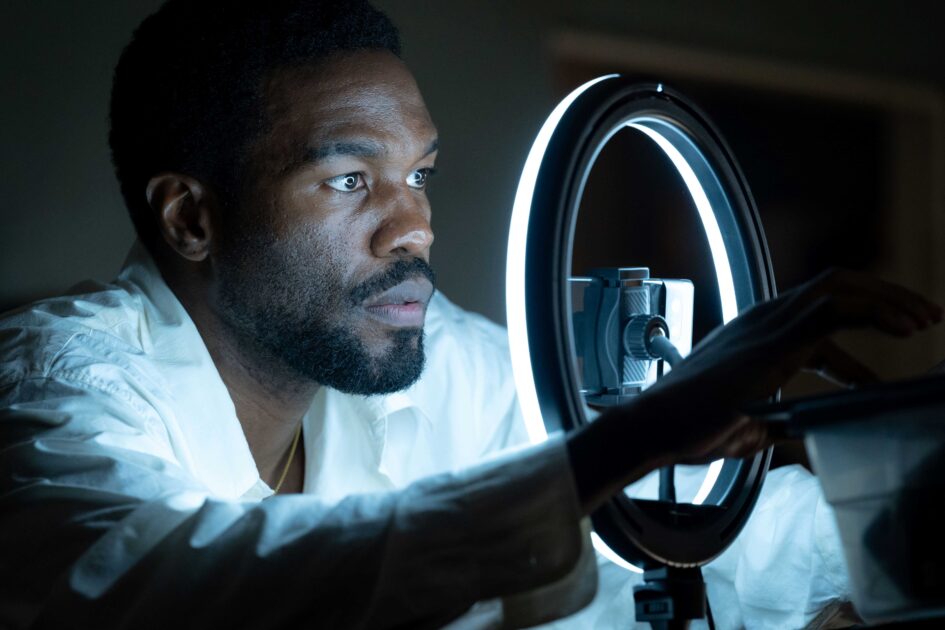
Focused on struggling actor Simon Williams (Yahya Abdul-Mateen II no longer plunging the depths of the DCEU as Black Manta), Wonder Man surprisingly spends the majority of its first season trying to figure out who, exactly, is Simon. Hustling every day while trying to make his big break within the industry, the struggle is real. He’s a loner — even around his own family. Trust is very hard for Simon. It’s something he doesn’t treat lightly. It’s why he doesn’t have many friends. Or friendly things to say about his own brother. And why there’s no romance in his life.
But after a seemingly chance encounter with Trevor Slattery (Sir Ben Kingsley’s long-awaited return to the MCU), his luck returns — and not always for the better.
With no true friends, Simon is kinda scared to actually be himself. That insecurity bleeds into his professional life. As a needy actor, he’s not self-aware enough to see that he’s platooning his own career. But when he discovers the casting call of a long-favorite superhero role, Simon might just have one last grasp at fame… and happiness.
“Finding inspiration in another movie is not a crime.”

Sir Ben Kingsley finally gets a meaty role within the MCU.
Wonder Man spends the majority of its eight-episode first season developing Simon’s character, taking a deep dive into his successes and failures, defining the character’s true nature. While it takes a little bit of time to get there, it also showcases the highs and the lows of the film industry. In fact, this feels like a superhero story for movie aficionados.
Eventually, it’s a success story, with an exceptional side of useless movie trivia that was especially tasty for this viewer.
Having experienced the movie industry firsthand for four years, I lived through some of Simon’s struggles, but I felt like my responses were more positive than the choices he makes. Simon never truly needs comforting — he just needs a break. That leads us back to Trevor. No longer an infamous fake terrorist, Trevor Slattery is still up to no good. After watching Iron Man 3, I wondered if Kingsley’s character would ever return to the Marvel Cinematic Universe and by hook or by crook, he has happily obliged.
I had to catch up with the Marvel One-Shot: All Hail the King and Shang-Chi and the Legend of the Ten Rings beforehand, but I was prepared for Wonder Man. At 13 years sober, Slatterly is no longer pretending to be The Mandarin. He’s back in Hollywood and ready to make his mother proud.
The show addresses his absence of prison time, along with his new secret role. Sir Ben is simply too big of an actor to have received a smallish role and then forgotten, so I’m happy to see his return (which also connects this storyline back to Phase Two). I actually enjoyed his fallen-onto-hard-times journey more than anything else in this series.
So, what do you call a superhero show focusing on a character who doesn’t really use his superpowers? I call it an ingenious attempt at winning back an audience that already expects each subsequent story to be bigger and flashier, bringing more gravity to the overall MCU. Instead, Wonder Man doesn’t attempt (or need) to go there. It brings a street-level hero into the fold without ever going over the top in its storytelling, eventually demanding a second season, as Simon never truly receives much of a backstory — or an explanation for his superpowers — that he won’t even admit to himself. In fact, they’re only shown a handful of times throughout the entire season.
Wonder Man does attempt to address Simon’s unstable, dangerous “extraordinary threat” via the Department of Damage Control (DoDC), which I’d totally forgotten about, even though it has made previous appearances in other Marvel properties. These are the true bad guys, here, even though this governmental agency attempts to protect the country from supernatural threats.
I found two story elements particularly interesting: Simon’s race swapping is slyly addressed, as the titular character originally appears in a feature film he watches as a kid (although Simon never actually takes the superhero title in Season 1) and an entire episode focuses on the downside of superheroes via Demar “Doorman” Davis in my favorite episode, the black-and-white “Doorman.” In a perfect world, this episode should win many awards next year.
Creators Destin Daniel Cretton and Andrew Guest have created a scenario where a superhero and a con man team up to take on the world (and Hollywood, as well). Nothing good will surely come from these Phase Six adventures (I hope!). In fact, at the beginning of Episode 6, there’s a line of dialogue that describes a famous filmmaker’s mansion, but it also precisely doubles for Wonder Man, as a series: It represents everything that is both loved and detested about Hollywood, all at once. Well-crafted, I enjoyed Wonder Man much more than I was previously expecting.
“Our ideas about heroes and gods, they only get in the way.”