Regret has a way of making the past feel like a mistake that could be corrected if we were just given one more chance. We replay moments in our heads, convinced that a different choice or a better version of ourselves could have fixed everything. The idea of going back feels comforting. Like healing a wound rather than escaping the emotions.
But the longer I sit with that thought, the more fragile it becomes. Changing the past would not just erase the parts that hurt. It would unravel everything that followed. My daughter might never have been born. The woman I am about to marry could still be a stranger. The people who shaped my life through love, loss and persistence might be completely different versions of themselves. What begins as a desire to undo pain quickly turns into a willingness to gamble away the life that I am deeply grateful for.
That uneasy space is where Back to the Past, directed by Ng Yuen-fai and Jack Lai, finds its premise. The film is a continuation of the television series A Step Into the Past, which originally aired in 2001. Set 19 years after the events of that series, the story revisits a world shaped by time travel, ambition and revenge.
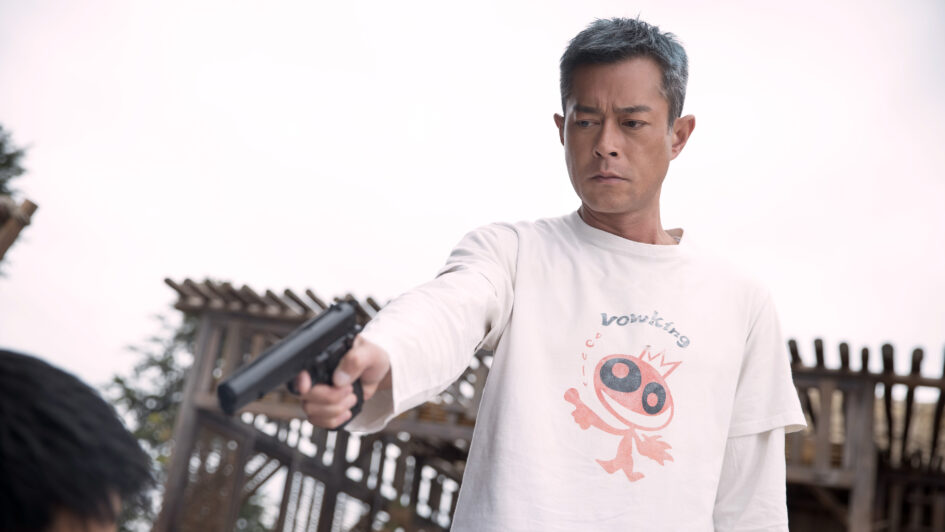
The narrative pulls Hong Siu Lung (Louis Koo) out of retirement when Ken (Michael Miu) arrives from the future and launches an attack on the Ying Ching Empire with a group of mercenaries. Wrongfully imprisoned in his own timeline, Ken becomes consumed by the belief that history owes him more. His plan is simple and ruthless: Go back in time, seize control of an empire and reclaim the life he believes was stolen from him.
To protect the empire, Ying Ching (Raymond Lam) turns to his former adviser, whom he previously exiled for help. What follows is a clash of eras and philosophies, with Hong relying on his knowledge of modern technology while Ying counters with ancient wisdom. Together, they stand as the last line of defense against a man willing to rewrite history for personal redemption, no matter the cost.

Going into this, I had never seen the original series, A Step Into the Past, which initially made me wonder how lost I might feel jumping into a sequel nearly two decades later. Thankfully, the film does a solid job of constructing its story in a way that does not demand extensive prior knowledge. Ken’s motivation is clearly established, allowing the emotional stakes to land without lengthy exposition. While longtime fans will obviously catch more callbacks and nuances, newcomers like me are given enough context to stay grounded, making the film accessible without feeling overly simplified or weighed down by forced explanations.
What really won me over was the concept, itself, and how confidently Back to the Past builds on it. In the original setup, Hong Siu Lung travels back in time to ensure Ying Ching rises to power, fully aware that he cannot actually change history. That limitation has always been part of the tension in time travel films. What makes it fun is that the rules do not stop him from bringing pieces of the future with him.
In this film, that idea is pushed even further when Hong gains assistance from another traveler from the future, introducing motorbikes, hoverboards and a wildly advanced phone into an ancient world. Rather than feeling gimmicky, these additions feel like a natural evolution of the premise. I appreciated that the film is not afraid to give Hong real advantages, allowing him to level the playing field against Ken and turning the conflict into a battle not just of power, but of ingenuity across eras.
Where the film stumbles is in its visual effects, which feel surprisingly dated given the era we are in. Modern studios have access to some of the most advanced tools the cinema has ever seen, and when a film operates at this scale, it is reasonable to expect effects that feel polished and immersive. Instead, much of the work here lacks crispness. Green screen shots are often obvious, and the wire work during action scenes is easy to spot. Rather than enhancing the spectacle, these moments pull attention away from the story, creating a visual disconnect that is hard to ignore, especially in a film so reliant on time bending spectacle and heightened action.
In the end, I give Back to the Past three out of five stars. I genuinely enjoyed the core concept, the way the film embraces time travel as a tool rather than a cheat code and how unafraid it is to let Hong gain advantages through modern technology to stand toe to toe with Ken. The story is approachable even without prior knowledge of the series, and the emotional through line about power, entitlement and trying to reclaim a lost life works more often than not.
That said, the dated visual effects are hard to overlook, especially when the film asks you to buy into large scale action and spectacle. Those rough edges keep it from fully sticking the landing. Still, when I circle back to my own thoughts about regret and the temptation to change the past, the film lands somewhere honest.
It understands that rewriting history rarely fixes what is broken. That idea alone gives the film weight, even when the execution occasionally falls short.