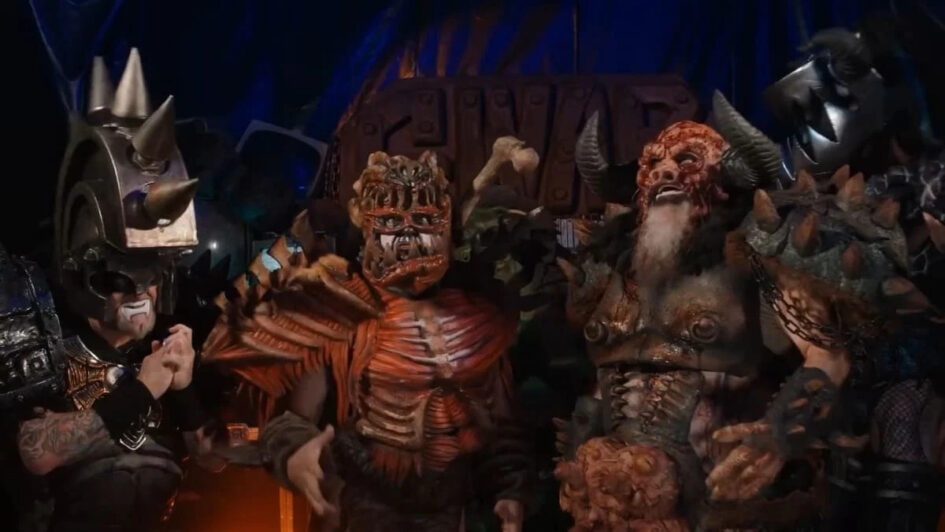
My introduction to GWAR happened many years ago at Dragon Con in Atlanta, Georgia. Back then, the band seemed to be a regular fixture at the convention, and their performances were something you really had to experience to believe.
I honestly couldn’t tell you much about the music, itself. I remember it being some form of heavy metal that was so loud and incomprehensible that I’m fairly certain it contributed to my hearing loss. What I do remember, however, is the sheer amount of fake blood and body parts being launched into the audience with reckless abandon. We’re talking gallons of the stuff.
Anyone unfortunate enough to find themselves within the first 10 rows had better come prepared with plastic sheeting or a poncho, unless they wanted to spend the rest of the convention looking like an extra from a particularly gruesome horror movie. It was loud, disgusting, completely ridiculous and absolutely unforgettable.
So, when I learned that GWAR would be featured prominently in V/H/S/Mixtape, the latest installment of the long-running found-footage horror anthology franchise, I was genuinely curious to see what the band would bring to the table. After all, it was known for outrageous stage performances, grotesque costumes and spraying audiences with bodily fluids, which seemed like a natural fit for a series that has never been particularly concerned with good taste.
Unfortunately, as I quickly discovered, there’s a considerable difference between experiencing GWAR’s particular brand of insanity in person and watching it repeatedly interrupt a collection of horror stories. So, let’s breakdown the segments.
The GWAR Interludes
Rather than using a traditional framing story to connect its various segments, V/H/S/Mixtape employs GWAR as something resembling the video jockeys from MTV’s glory days. Remember when MTV actually played music videos? Between songs, the VJs would introduce upcoming videos, interview musicians and occasionally participate in ridiculous little skits. That’s essentially what GWAR does here, although the band’s version involves considerably more blood, bodily fluids and jokes that probably wouldn’t have made it past MTV’s censors.
It’s an interesting idea, especially considering the movie’s emphasis on music and sound, but the execution is hit or miss. Some of the introductions are entertaining enough, while others feel unnecessarily vulgar or simply forgettable. GWAR’s outrageous personalities certainly fit the aesthetic, but the band’s repeated appearances don’t always contribute much beyond interrupting the momentum.
One out of five stars.
“Dance, Dance, Dance, Dance”— Directed by Renee Zhan
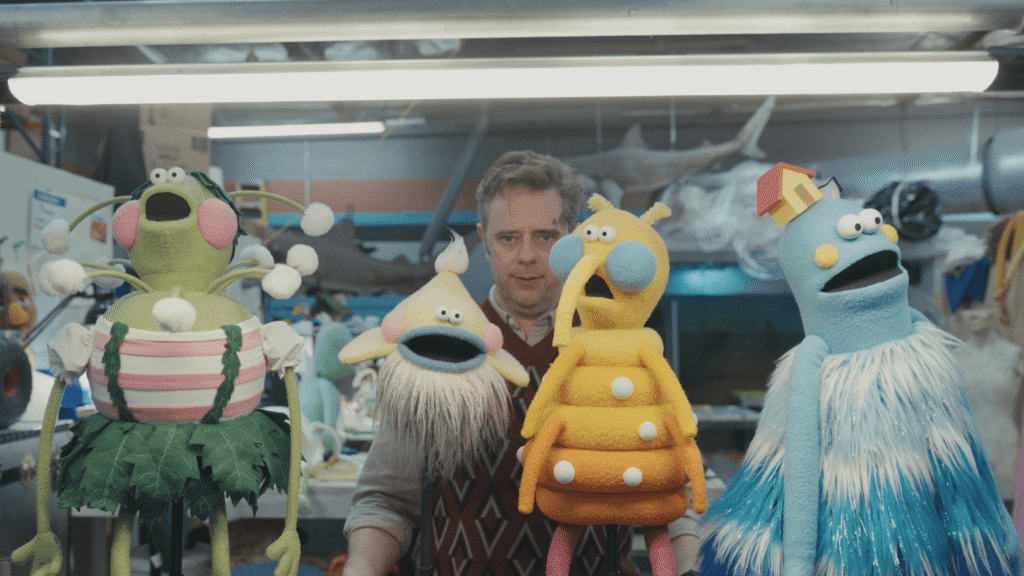
The first proper segment, “Dance, Dance, Dance, Dance,” features horror veteran Barbara Crampton as a businesswoman hoping to resurrect a children’s program she remembers from her youth. She brings a small production crew to the show’s original studio, where they discover that some childhood memories are probably better left alone.
The highlight here is undoubtedly the puppets, which were created by Jim Henson’s Creature Shop and look fantastic. Unfortunately, the whole concept of seemingly innocent children’s entertainment becoming murderous has been done so many times that it’s beginning to lose its effectiveness.
Between Five Nights at Freddy’s and The Banana Splits Movie, we’ve already seen plenty of examples of childhood nostalgia turning deadly. There’s certainly no shortage of blood, but impressive puppets can only carry an overly familiar premise so far.
Two out of five stars.
“Another Cabin” — Directed by Flying Lotus
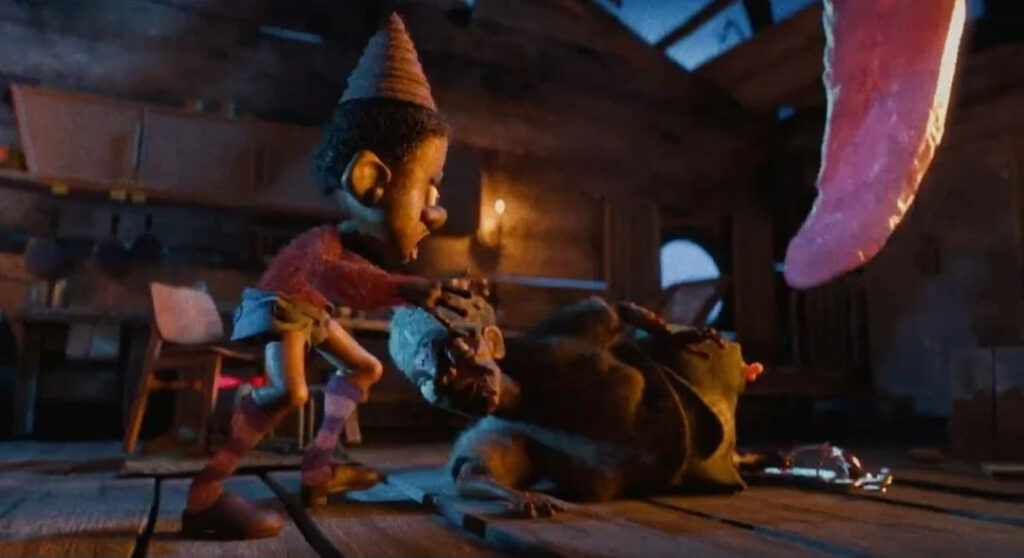
“Another Cabin” is a brief stop-motion animated short featuring a young boy, alone in a cabin, who finds himself confronted by a monster. The stop-motion animation is well done, and there’s certainly some craftsmanship on display, but unfortunately, that’s about all I can say in its favor.
There’s very little in the way of an actual story beyond a boy being attacked by a creature. It comes and goes so quickly that there’s barely enough time to become invested in what’s happening.
While I can appreciate the work that goes into stop-motion animation, impressive visuals alone aren’t enough to make a segment memorable. In an anthology filled with increasingly elaborate stories, this one feels more like a brief distraction than a fully realized entry.
Zero out of five stars.
“Heartbeat” — Directed by David Moreau
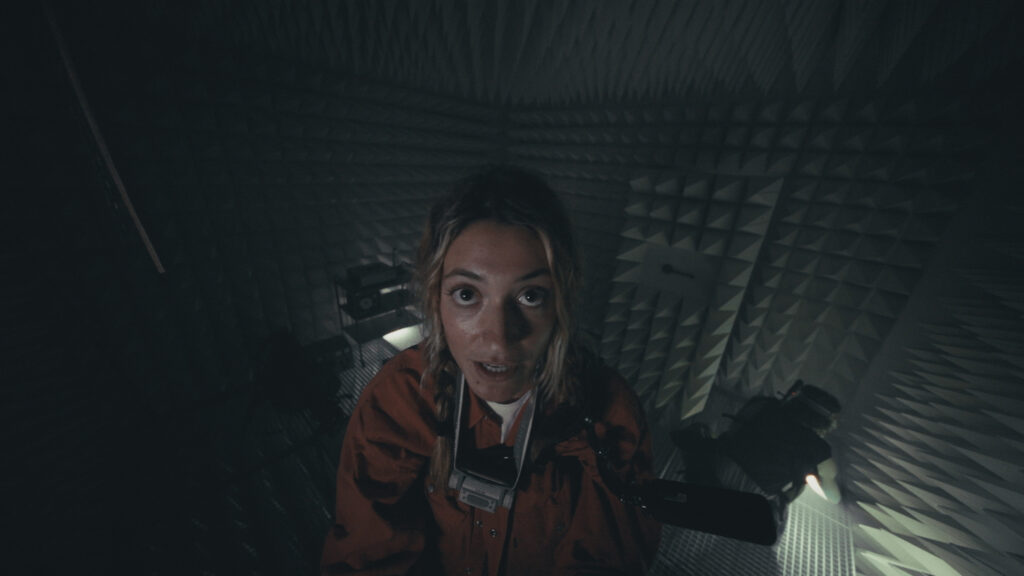
David Moreau delivers one of the more interesting entries with “Heartbeat,” which follows a couple named Maya and Wes as they explore what they believe to be an abandoned bunker. Their adventure leads them into a former Ministry of Defense facility containing a mysterious acoustic testing chamber. Naturally, curiosity gets the better of them, and they soon discover that some experiments are best left undisturbed.
What makes this segment effective is its clever use of sound, transforming something as ordinary as a heartbeat into a source of genuine terror. Rather than relying entirely on elaborate creatures or excessive violence, “Heartbeat” creates an unsettling atmosphere through confinement, desperation and the terrifying realization that the characters cannot escape what they’re hearing.
It’s one of the stronger entries in the collection and demonstrates how effectively the movie’s musical theme can be incorporated into horror.
Three out of five stars.
“The Music of Mr. Sze” — Directed by Ernest Dickerson
“The Music of Mr. Sze” follows Philip, an aspiring documentarian using a pair of camera glasses to record his experiences living in a boarding house filled with unusual residents. His curiosity eventually turns toward Mr. Sze, a mysterious violinist whose late-night performances seem to conceal something sinister.
Initially, this segment does an excellent job establishing an atmosphere of unease. The strange neighbors, unexplained music and increasingly peculiar behavior of Mr. Sze create an intriguing mystery. Unfortunately, the story eventually abandons much of that carefully constructed tension in favor of increasingly elaborate supernatural spectacle.
It’s certainly ambitious, but the more outrageous things become, the less convincing the found-footage presentation feels. What begins as one of the anthology’s more promising mysteries ultimately loses some of its effectiveness by trying to do too much.
Two out of five stars.
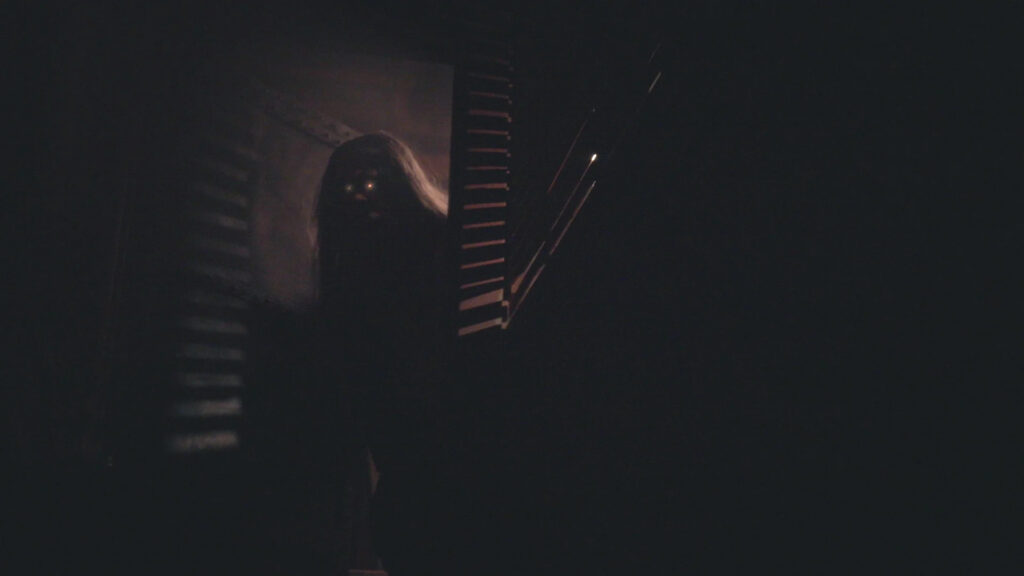
“Premature Burial” — Directed by Tobias Forge
“Premature Burial” takes a completely different approach by presenting its story as an old-school heavy-metal music video. Complete with the familiar song information appearing in the lower corner of the screen, it feels like something pulled straight from MTV’s Headbangers Ball.
The segment alternates between footage of a band performing and a gruesome story involving a doctor, his former assistant and a particularly unfortunate burial. It’s a straightforward tale of murder and revenge, but the music-video presentation makes it stand out from the surrounding stories.
More importantly, it embraces the anthology’s central theme by allowing the music and accompanying imagery to tell the story together. Whether the narrative, itself, offers anything particularly original is debatable, but the nostalgic presentation is a welcome change of pace.
Three out of five stars.
“Death Tone” — Directed by RZA
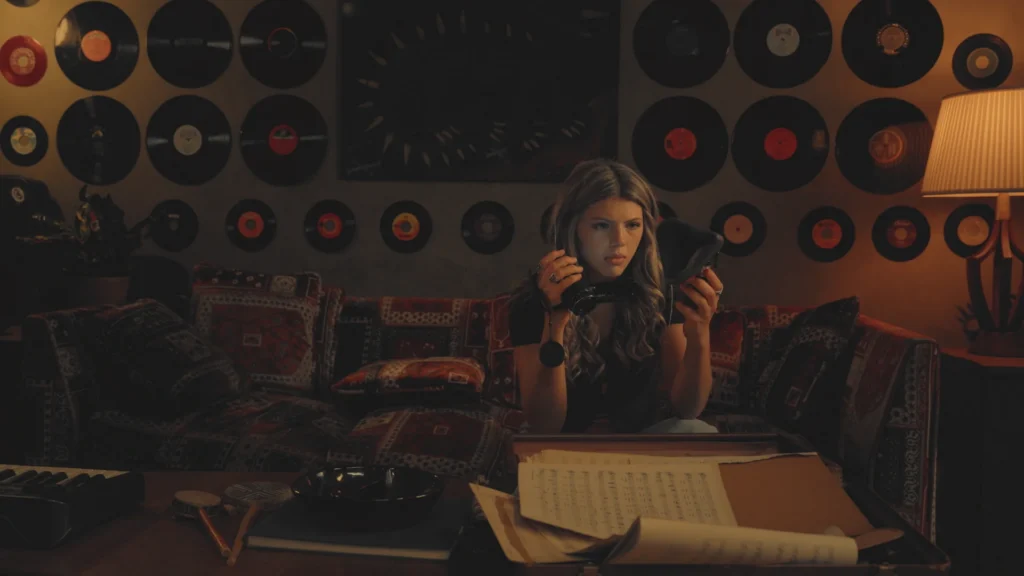
The final segment, “Death Tone,” follows Lydia, a young woman determined to finish a musical composition left incomplete by her deceased father. Following the instructions he left behind, she begins documenting her creative process, searching for sounds that conventional instruments simply cannot produce. Unfortunately, her methods become increasingly disturbing as her obsession with completing the composition takes over.
Of all the segments, this one arguably embraces the movie’s central concept most completely, finding a genuinely twisted connection between music and violence. There are also some particularly inventive uses of camera technology, including one perspective that manages to make the already gruesome proceedings even more unsettling.
However, the relentless escalation of violence occasionally threatens to overwhelm the story, itself. It’s creative, disturbing and certainly memorable, even if its ambition sometimes gets the better of it.
Four out of five stars.
I give V/H/S/Mixtape two out of five stars.
Ultimately, it is a frustrating addition to a franchise I’ve enjoyed for years. The idea of exploring the relationship between music and horror is intriguing, and there are moments when everything comes together. “Heartbeat” makes excellent use of sound to create genuine tension, while “Death Tone” finds some particularly disturbing ways to incorporate music into its violence. Unfortunately, those moments are surrounded by stories that either fail to develop their ideas or become so preoccupied with outrageous visuals that they forget what made the V/H/S franchise appealing in the first place.
Found footage works because it creates the illusion that we’re watching something that actually happened. When the filmmakers abandon that approach in favor of elaborate supernatural spectacles and increasingly conventional horror sequences, much of that illusion disappears. It’s difficult to become immersed in something that constantly reminds you you’re watching a movie.
Looking back on those GWAR performances at Dragon Con, I remember barely understanding a word of the music, but I certainly remember the experience. The chaos, the spectacle and the gallons of fake blood flying through the air all came together to create something unforgettable. Unfortunately, V/H/S/Mixtape seems to have remembered the blood and chaos while forgetting the importance of making the experience memorable.
There’s a potentially great horror anthology buried somewhere beneath all the noise, but the execution rarely lives up to the concept. Even the better stories struggle to overcome the movie’s uneven presentation, leaving us with one of the weakest installments in the franchise.
Sometimes, a mixtape is only as good as the person putting it together, and this particular collection could have used a little more time in the recording studio.