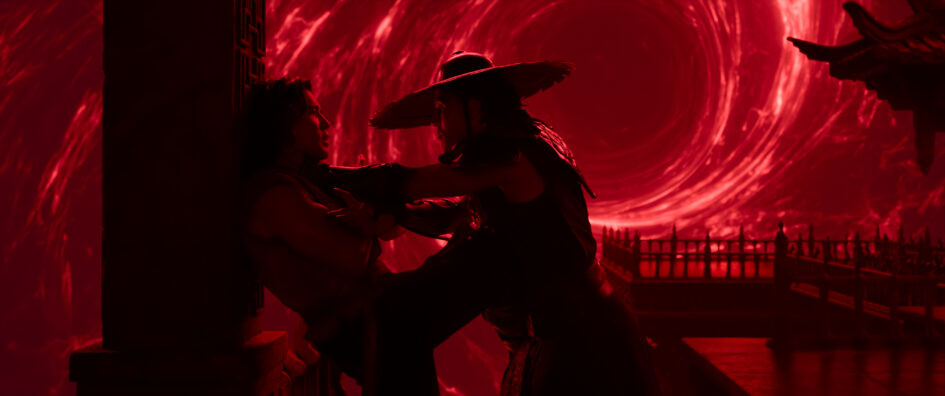
If the mere mention of Mortal Kombat doesn’t immediately bring back fond flashbacks to the days of coin-op arcades, Mortal Monday of 1993 or the Immortal’s “Techno Syndrome (Mortal Kombat) Song,” well… you’re not me.
As someone who lived through the fighting game’s fad and peak years of pop-culture influence, it’s safe to say that the franchise has been through a lot. From indie underdogs to overnight millionaires and later political pariahs, there’s no way the developers at Midway Games could have foreseen their creation prospering for 34 years and through 2026, four big-screen adaptations.
Ed Boob and John Tobias didn’t create the Beat ‘Em Up, Hack and Slash or Fighting Game genres, but they pretty much perfected them. Following the release of Street Fighter II in 1991 en route to becoming the best-selling arcade game of that year, MK dodged the anime-like cartoonish style of its predecessor and adopted the photo-realistic digitized sprites that made each and every over-the-top move feel brutally in your face. Yes, there was blood and gore, which was groundbreaking at the time. The graphics had never looked so great in an arcade cabinet before. But the biggest draw was lining up behind others to compete for that expected Fatality and ending their suffering (until another competitor stepped up).
Back then, there was no internet used to look up cheat codes, you had to experience the game firsthand in trying to remember the characters’ moves and perfectly time their execution in order to taste success. There were also secret characters to unlock as well as Easter Eggs to find, if you were observant. It was the Wild West for video games, for sure.
In trying to capture lightning twice, Mortal Kombat II was released without delay. New characters were added. More gore splattered everywhere and more money was made at the arcades. And when the original game was released onto home consoles, its violence spawned the ESRB (Entertainment Software Rating Board), which created ratings for video games. Yet another groundbreaking creation from the franchise.
As its popularity grew, the outreach of MK onto pop culture kept growing. Comics, novels, soundtracks and there were even live-action performances, but my favorite release of the franchise was its first big-screen adaptation. Premiering in 1995 and distributed by New Line Cinema, the film mostly followed the events of the original game, along with elements of the second one.
From the very beginning, my favorite characters to play MK have been Liu Kang and Raiden, mostly because their moves weren’t the most complicated, and their animations were always fun to behold. Christopher Lambert’s performance as the guardian of Earthrealm is far and away the best acting of all the films, which says a lot about their quality. The special effects of the first film weren’t the greatest, but they passed for a PG-13 fantasy film.
Originally, I had high hopes for Mortal Kombat: Annihilation, but the sequel, which released two years later, felt like a cheesy version of the later editions of the franchise, which I’d already moved away from. For the most part, my interest in the franchise faded as other hobbies occupied my time, but I’d heard good things about the Warner Bros. reboot of 2021. I never caught it at the movie theaters, but I was interested in seeing a modern-day take of the video game.
Nostalgia finally kicked in with the expected release of Mortal Kombat II and for the last two weeks, I’ve been voraciously devouring so many MK releases. Lots of YouTube videos chronicled behind-the-scenes drama from the franchise that I never knew, and I finally watched the 2021 movie, which I liked, but I didn’t appreciate a new main character (Cole Young) pulling you into the events of the fighting tournament that was never present in any of the games. Clearly, this wasn’t a faithful adaptation, but it did present an introduction to the IP from an outsider’s perspective (the original film felt like it was created for already-established fanboys and fangirls).
After watching that, I ventured to the DTV animated fare, which can currently be found on HBO Max. First up was Mortal Kombat Legends: Scorpion’s Revenge. This R-rated gorefest follows the titular character escaping death and getting resurrected in the Netherrealm in order avenge the murder of his family. This movie was decent and I appreciated the use of 14 of the franchise’s main characters.
Next up was Mortal Kombat Legends: Snow Blind, which creates a new backstory for Sub-Zero. Long after Shao Khan’s defeat in the MK tournament, Earthrealm has turned into a barren wasteland filled with Zombies. No longer using his powers, Sub-Zero is now a simple farmer until King Kano’s tyrannical rule pushes him over the edge. Even though I watched this one out of order, its creativity interested me the most while veering far from the source material.
Mortal Kombat Legends: Battle of the Realms felt like the most loyal of the animated releases to their video-game origins. As warriors are chosen for the Outworld tourney, Earthrealm’s fate lies in the balance. The Elder Gods play pivotal roles in its outcome, which have been overlooked in many other adaptations. I enjoyed seeing them here.
My final animated viewing entry was Mortal Kombat Legends: Cage Match, which served as a prequel story for Johnny Cage, a bloviated B-movie actor with a specialty in martial arts and self-importance who bites off more than he can chew in a conspiracy with a movie producer (Rest In Peace, Gilbert Gottfried, in his final acting role) who provides more than meets the eye to Cage’s Hollywood prospects. Honestly, a little bit of Johnny Cage goes a long way. I stopped watching midway through the film because the character is just too grating. Any other character would have been a better selection for a backstory other than him.
Now in its second week of wide release at movie theaters, I haven’t seen the live-action MK sequel just yet (I plan to see it by the time awards season returns), but from what I’ve read, Cole Young is no longer a main character, which is a step in the right direction. And a washed-up Johnny Cage has been invited to join the chaos, which might not be my favorite character of the bunch, although the character is played by Karl Urban…
According to Deadline, Mortal Kombat II has accumulated $101.2 million at the global box office ($62.2M domestic and $39M int’l), making it the second highest grossing film of the franchise so far. That’s the good news. But it never notched the No. 1 spot at the U.S. box office, and it seems to be falling quickly, in terms of the amount of money it’s making — that’s the bad news. With a reported $80 million budget (and another estimated $80 million in marketing costs), it hasn’t broken even just yet, but that moment could be coming soon. Or, it might not.
The longevity of Mortal Kombat continues into the 21st century and I’ve enjoyed catching up on the past releases which I previously missed. I’m not exactly sure what will happen to the franchise in the near future, as the video game canon has now been rebooted and I simply can’t keep up with what has officially happened within the franchise and what is simply a multiverse story. But I can catch up on the films the easiest, which I’ve enjoyed the most.
Looking forward to discovering the results of Mortal Kombat II in the near future!